
3-Reel Slots in the UK: How Online Play Works
 Available in GB
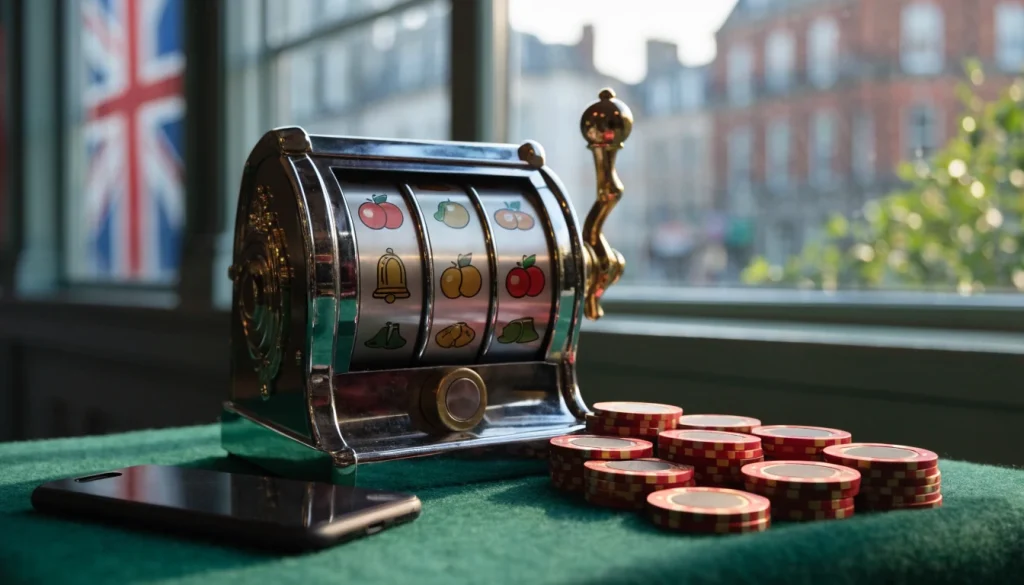
Online reels are visual representations; game software determines outcomes, and the paytable sets which symbol patterns count.
How Three-Reel Slots Work Online
A three-reel slot is the digital version of a compact slot format: symbols sit in vertical columns, and a spin changes the symbols shown on the screen. The result is judged by the game’s rules, not by the physical movement of a machine. Online, that process is handled by software. The screen presents the reels and the outcome; the underlying game determines how a result is formed.
The word “reel” can make the format sound more mechanical than it is. On a cabinet, reels were physical parts that turned. In an online game, they are visual representations. Their movement is animation, while the outcome is generated electronically. The animation may make the result easier to follow, but it does not make the symbols more or less likely to appear.
A game’s paytable explains which symbol combinations count and what they return under its rules. A line or other defined pattern may connect symbols across the displayed reels. The important point is that the game does not simply reward any matching symbols anywhere on the screen. The rules specify what counts as a win and how the displayed result is evaluated. Two games with the same reel count can therefore behave differently.
Choosing a reel slots site involves more than the games: it is also worth checking how quickly withdrawals are processed. The details below provide a concise reference to the payout-speed information available for this list.
1. NightLuck
Payout speed: 1-3 business days
The stated payout speed is 1–3 business days.
2. BeOnBet
Payout speed: 1-3 business days
The stated payout speed is 1–3 business days.
3. EvoSpin
Payout speed: 1-3 business days
The stated payout speed is 1–3 business days.
4. Zombillion
Payout speed: 1-3 business days
The stated payout speed is 1–3 business days.
5. NightWin
Payout speed: 1-3 business days
The stated payout speed is 1–3 business days.
6. Jetsetspins
Payout speed: 1-3 business days
The stated payout speed is 1–3 business days.
7. Revery Play
Payout speed: 1-3 business days
The stated payout speed is 1–3 business days.
8. SpinFormula
Payout speed: 1-3 business days
The stated payout speed is 1–3 business days.
9. Britsino
Payout speed: 1-3 business days
The stated payout speed is 1–3 business days.
10. SlotoSport
Payout speed: 1-3 business days
The stated payout speed is 1–3 business days.
The reel count changes the layout
The most visible difference between a three-reel and a five-reel game is the amount of screen space involved in a result. A three-reel layout presents a shorter sequence of symbols. A five-reel layout gives the game a longer arrangement, with more positions and more ways for its rules to define combinations.
That distinction is about structure, not quality. A larger layout is not automatically more generous, and a compact layout is not automatically simpler in every respect. The rules still matter: a restrained screen can have special symbols or more involved conditions, while a broader one can use straightforward matching patterns.
A bet in a five-reel slot can be applied across all five reels. That makes the scope of the stake part of the game’s setup: it is not merely a matter of watching a larger picture. The paytable and betting controls show how the selected stake is used and which combinations are eligible. The same habit is useful with a three-reel game: understand the displayed rules before treating the reel count as a guide to how it plays.
I have found that the screen can encourage assumptions. A familiar-looking layout seems self-explanatory, so the paytable gets skipped. That is where small differences hide: a symbol may have a special role, or a combination may need to appear in a particular arrangement. The animation tells the story of the spin. The rules decide what the story means. Not the same thing.
Games & Providers: UK Casino Game Guides
Online controls and presentation
In a browser or casino app, the game typically places the spin control, stake setting and paytable around the reel display. The exact arrangement depends on the title and the device. On a smaller screen, some information may sit behind a menu rather than beside the reels. The presentation can change, but the game’s rules remain the reference point.
The spin control starts a game cycle; the animation then shows the outcome. Buttons and menus are interfaces, not evidence about the odds or the value of a result. A quick animation may feel decisive, while a slower one may build suspense, but presentation does not alter the rules. I treat visual effects as packaging. The paytable is the useful document.
This is also why “online” does not describe one uniform kind of slot. Different titles can share a three-reel layout but use different symbols, patterns, controls and paytable conditions. The category identifies a broad visual structure. It does not promise a particular theme, pace or result.
The same distinction applies to 3 reel slots online that resemble traditional machines. Their appearance may borrow familiar cues, but the game is still software running through an online service. A digital recreation is not a physical cabinet, and the screen’s reel movement is not a mechanical process. That difference matters when reading the game interface: it is the written rules, rather than the apparent movement of the reels, that explain how the result is assessed.
Regulation
In Great Britain, remote gambling is regulated by the UK Gambling Commission, which issues operating licences to businesses and personal licences to individuals in relevant roles.
Regulation and the service behind the game
The slot itself is only one part of the online arrangement. The operator provides access to the game, while the game software supplies its presentation and rules. In Great Britain, remote gambling offered to consumers is regulated by the UK Gambling Commission regardless of where the key equipment is located. The Commission is the sole regulator for commercial gambling in Great Britain and issues operating licences to businesses, as well as personal licences to individuals working in relevant roles.
That regulatory framework concerns the gambling service and its operation; it does not make every title identical or remove the need to read its rules. Nor does a three-reel layout tell anything by itself about the operator. Game format and operator status are separate questions. The first is answered on the game screen; the second concerns the business providing the service.
So the practical way to read the format is modest: count the reel columns, then check how the title defines winning patterns and applies a stake. A five-reel slot can use a bet across all five reels; a three-reel title presents a more compact layout, but its own rules still control the result. Familiar shape. Specific rules.
Real-Money Play and the Limits Behind It
Real-money 3 reel slots involve a wager with monetary value: funds are taken from a gambling balance when a game cycle begins, and any return is credited as money rather than as practice points. That distinction matters more than the cabinet-like graphics or the old-fashioned look. A fruit machine theme can appear in either format; the artwork does not tell the player whether a spin is being funded with cash or demo credits.
RTP Slots in the UK: What Return Figures Mean
A free demo has no monetary stake and cannot award a cash payout. It may resemble the paid version closely, but the balance shown in it is not withdrawable money. In real-money play, the balance and the terms attached to wagering matter. “Real money” is not just a label for a game that looks familiar: it means an actual financial transaction is involved.
For people considering whether to play 3 reel slots for real money, the relevant limits are set by the market rules and the operator’s terms, not by the number of reels. A specialist gambling review reports that the online slot stake limit in Great Britain is £5 for a customer aged 25 or older and £2 for someone aged 18 to 24, measured for each game cycle. That is a limit on the stake, not a suggested amount to wager and not a promise about what a spin will return. The age distinction is material. A game’s menu or promotional description does not override it.
The age of the account holder also affects access to gambling funds. Operators must verify a customer’s age before allowing a deposit into a gambling account. In Britain, real-money gambling is legal for adults at online casinos holding a UK Gambling Commission licence. Remote operators serving the British market are subject to that licensing requirement, even if their key equipment is elsewhere. The commercial boundary is clear: a site offering real-money play to British customers must operate under the relevant local licence.
Stake Limits
In Great Britain, the online slot stake limit is £5 for customers aged 25 or older and £2 for those aged 18 to 24 per game cycle.
This is why “best real-money 3 reel slots” is not a useful description on its own. It says nothing about the stake limit, whether the game is being offered for cash or as a demo, or the conditions attached to an account. Nor does “retro” establish anything about payment or regulation. A familiar design can make a game feel like a traditional machine, but wagering conditions remain those of the online casino and the rules governing its market.
From the operator’s side, the split between demo and paid play is deliberate. A demo lets the game be opened without placing a monetary stake; it is a separate mode, not a way to test a real-money balance without risk. The paid mode has consequences for the account. A displayed stake is deducted as part of a real transaction, subject to the applicable cap, while demo credits remain fictional. Those are different products in practical terms, even when the screen looks much the same.
The useful distinction is therefore not “classic” versus modern, or fruit symbols versus other artwork. It is whether the game is being played with money and under the conditions of a licensed real-money service. For a three-reel title, the compact layout may be the attraction; it does not alter the legal stake boundary. The screen can look simple. The account rules are not.
Bonus-Buy Slots in the UK: Demo and Real Play
Classic Slots and the Free-Play Distinction
“Classic” is a style label, not a guarantee about how a game works. In online casinos, it often points to a restrained presentation: familiar symbols, a compact-looking play area, simple rules and fewer layers of animation than a feature-heavy video slot. A three-reel game may fit that description, but the terms are not interchangeable. Reel count describes the layout; classic describes the impression the game is designed to create.
The distinction between classic slots and video slots is therefore more about presentation and complexity than a hard boundary. Video slots often put more emphasis on animated scenes, changing features and bonus sequences. A classic-style game tends to keep attention on the central play area and make its theme legible at a glance. There are exceptions on both sides. A simple-looking game can still include extra features, while a video slot can use a spare design.
That is why “best classic” is not a useful category on its own. The label tells little about whether a game will suit a particular taste, and it says nothing reliable about its return or the quality of its play. I have seen the word “classic” used as a shortcut for familiarity, even when the game has been built with modern software and a polished interface. Familiar does not mean identical to an old physical machine.
Do
- Focus on the central play area
- Keep the theme legible
- Use classic slots for a quieter arrangement
Don’t
- Assume “classic” guarantees a specific return
- Equate classic style with old physical machines
- Ignore the modern software interface
The old-fashioned appeal is often deliberate. Designers borrow visual cues associated with earlier casino games, then present them on a screen with contemporary menus and sound. The aim is usually clarity: fewer visual distractions, a recognisable theme and a straightforward path from the main screen to the controls. Some players prefer that quieter arrangement. Others find it plain beside games that develop a story or change their presentation as play continues.
A three-reel title can be tried in a free-play version where one is offered. That is useful for seeing the interface and getting a feel for the game’s pace, but it is not real-money play. Demo credits are fake money, and they cannot be exchanged for cash or produce a payout. A balance shown on the screen is part of the demonstration, not a prize owed to the player.
This distinction matters because the same game may be presented in both demo and real-money modes. The screen can look much the same, which makes the difference easy to overlook. In free play, the apparent balance and any simulated results have no cash value. A “win” in the demo is only an outcome within the practice version. No payout follows.
I would treat a free version as a way to inspect the design, not as evidence of what real-money play will deliver. It can show whether the controls make sense and whether the presentation feels appealing. It cannot turn a simulated result into a promise about a later session. Different purpose.
Red Tiger Slots at UK Casinos: What to Check
For anyone looking to play a three-reel slot without wagering, the important question is whether the available version is clearly marked as a demo and uses non-cash credits. The word “free” can describe access to a demonstration, but it does not mean that winnings can be withdrawn. Classic style and free play are separate ideas: one describes the game’s look and feel, the other describes how the session is funded and whether any payout is possible.
What Makes a Three-Reel Slot a Three-Reel Slot
The defining feature is the number of reels in the game’s layout: a three-reel slot has three vertical columns of symbols. That sounds obvious, but the label is sometimes used loosely in descriptions of games that borrow a traditional look while adding extra screens, bonus areas or other visual elements. The appearance can suggest one format; the reel layout settles the question.
In practice, the main game area is read across the three reels. A spin changes the symbols shown in those columns, and the game evaluates the resulting arrangement according to its rules. The design may be plain or elaborate, but decorative frames and bonus graphics do not add reels. Nor does a classic visual style, by itself, establish that a game uses three.
I learned to separate the name of a format from its presentation. A cabinet-like frame can make a game feel familiar, while animation and layered menus make it look more modern. Neither tells the whole story. The useful check is whether the primary play area is built around three reel columns, rather than whether the artwork resembles an older machine.
Three-Reel Slot
A compact layout with three vertical columns of symbols.
Five-Reel Slot
A broader arrangement with five columns and more positions for combinations.
Classic Style
A visual impression using familiar symbols and restrained presentation.
A five-reel game has a different layout: five columns form the main reel area. A bet can be applied across all five reels, so the player is dealing with a broader arrangement than the three-column format. That is a structural difference, not a judgement about which game is better. The number of reels does not, on its own, tell anyone how entertaining or rewarding a title will be.
The distinction matters because labels can be more evocative than precise. “Classic” may describe the mood, and “three-reel” may describe the actual layout, but those terms are not interchangeable. Some games use old-fashioned symbols and sounds within a different reel structure. Others keep the compact three-column arrangement while updating the interface. The layout is the dependable part of the description.
A three-reel slot is therefore not defined by a particular theme, colour scheme or promise of simplicity. It is defined by three reels in the central game area. A five-reel slot remains a five-reel game even if its symbols and graphics imitate a traditional design. The distinction is visible before any judgment about the game’s style is made.
I would also avoid treating the reel count as a shortcut for understanding every rule. It identifies the basic shape of the game, not how its individual features operate. Two titles can share a three-reel layout and still present their symbols, controls and game rules differently. The label tells one thing clearly: how many reels make up the main arrangement. The rest belongs to the particular game.
That is the clean dividing line. Count the reels, not the decorative cues.
Eyecon Slots at UK Online Casinos: What to Check
Trying a Slot for Free and Understanding a Spin
A free-play version is useful for seeing how a particular slot behaves on screen before any real-money wagering is involved. It can show where the spin control sits, how the game displays a result and how its help panel explains symbols or features. That is practical orientation, not a rehearsal with cash at stake.
The distinction is plain but often blurred by the word “free”. Demo credits are fictional, not a balance that can be withdrawn or converted into money. A winning result in a demo produces no payout. The display may resemble a real-money game, but the credits have no monetary value and the outcome has no cash consequence.
I find a demo most useful when treated as a way to learn the interface rather than as evidence that a game pays well. A few spins can reveal whether the controls are clear and whether the result information is easy to read. They cannot establish what a real-money session will return. That is a different question.
Reading what happens on a spin
In a three-reel slot, a spin is the game cycle in which the reels move and stop to show an outcome. The game’s paytable or information panel explains which symbol combinations count and how the game records them. Reading that explanation before pressing the spin control makes the screen easier to interpret; otherwise, a result can appear without any clear sense of why it counted.
The interface may also include controls for the stake or a menu for rules. In free play, those controls operate against demo credits. Changing a displayed stake does not turn the session into real-money play, and a simulated win remains a simulated result.
Before Your Spin
- Locate the spin control
- Review the paytable for symbol combinations
- Check the game rules for winning patterns
- Set the desired stake
This is where questions about how to play a three-reel slot can be answered at a basic level: understand the controls, check the game’s own rules, then observe how a spin is presented. A demo can clarify operation. It cannot show that a game is a best-paying choice or that a larger-looking result predicts a future one. A high payout shown during practice is still only part of a demonstration.
The British rules around spinning
Free play should not be confused with the rules governing online slots in Britain. For real-money online slot games, each game cycle must last at least 2.5 seconds before the next one can begin. Autoplay is banned, so spins cannot be set to run automatically in succession.
That requirement affects the pace of real-money play, not the value of demo credits. A practice screen may make the buttons familiar, but it does not remove the rules that apply when a slot is played for money. The game must still run through its required cycle, and a player cannot use autoplay to bypass the manual spin process.
I have seen “instant” used as a selling word around games. The operational reality is more specific: a spin has a defined cycle, and British rules set a minimum interval before another can start. No shortcut. Free play remains separate from wagering, even when the same game interface is used for both.
NetEnt Slots at UK Casinos: What Can Be Verified
A sensible demo session ends with a clearer understanding of the controls and the information the game provides. It does not certify the slot as generous, create a claim to winnings or teach a system for beating the game. Practice, not payment.
Fruit Symbols and the Traditional Machine Feel
Fruit imagery carries a particular association: a compact set of reels, familiar icons and a presentation that recalls a physical machine. That is often what people mean by three-reel fruit slots. The appeal is visual as much as structural. Cherries, lemons and other bright symbols are easy to recognise at a glance, without a crowded screen of characters, story scenes or layered effects.
Online, the resemblance is an interpretation, not a reproduction. A game can borrow the look of a fruit machine while adding animations, sound effects or a digital interface that would not fit a cabinet on a counter. Conversely, a plain screen with fruit icons may feel closer to the old machine style even if its presentation is entirely software-based. The artwork sets a mood; it does not, by itself, tell much about how the game is configured.
I have seen “traditional” used as a reassuring label in promotional copy. What sits behind it is usually a promise about presentation: familiar symbols, uncomplicated visuals and a recognisable reel arrangement. It is not a technical guarantee, and it does not mean that every game with fruit symbols behaves alike. The label is doing its work before a spin begins.
Attention: Fruit artwork and a traditional appearance do not determine the payout; this information is only found in the game’s rules and paytable.
The same distinction matters when comparing digital games with memories of three-reel fruit machines. A physical machine has buttons, a cabinet and a screen or reel window. Its online counterpart is presented through a browser or app, and its visual cues are recreated on a display. Similar appearance does not make the two formats identical.
Nor does fruit artwork determine a three-reel slot payout. The symbols shown on screen are not enough to establish what a combination returns; that information belongs to the game’s own rules and paytable. A familiar icon may prompt expectations based on a machine seen elsewhere, but those expectations should not be carried across automatically. Appearance is not a payment schedule.
Free versions can preserve the same fruit-machine look, but they remain a separate experience from wagering. Their displayed credits are not money, and a free-play session does not award a payout. That distinction can be easy to miss when the screen imitates the real-money presentation closely. Same look, different stakes.
For people searching for three-reel fruit games, the useful question is therefore what kind of machine feel they want: minimal artwork, recognisable fruit symbols, or a more polished digital take on that style. Those are visual preferences, not evidence of a particular return or outcome. The fruit is familiar. The terms are game-specific.
Odds, Volatility and the Shape of a Session
Odds describe the chances attached to a game’s possible outcomes; volatility describes how those outcomes tend to arrive. They are related in a player’s experience, but they answer different questions. A slot can produce frequent modest returns or long stretches without a win followed by a larger one. Neither pattern, by itself, says whether the game is favourable over time.
The house edge is the part that matters to the long-run arithmetic. When a game has a positive house edge, its mathematical expectation is negative for the player over enough sessions. That remains true whether losses appear steadily or are interrupted by occasional wins. A session may end ahead; the expectation is not a prediction of every individual result. It describes the direction of the average across repeated play.
Casino Slot RTP in the UK: How to Read the Figures
That distinction is easy to lose when a session is judged by its most visible moments. A string of small wins can make a game feel generous, even if those returns do not offset the stakes over time. A quiet spell can feel like a change in the game’s behaviour, but it does not make a later win due. The arithmetic does not keep a personal account of what happened earlier.
Volatility shapes the ride. Lower-volatility slots tend to return value through smaller wins occurring more often. Higher-volatility slots tend to pay less frequently, with larger wins when they do arrive. The first pattern can make a session feel more active; the second can involve longer gaps and sharper swings. Neither changes the underlying expectation when the house edge is positive.
This is why “frequent wins” is not a useful verdict on its own. The phrase describes how often a return may appear, not whether the player is ahead overall. Likewise, a large possible win says little about how commonly it occurs. The presentation can foreground a payout or a run of smaller hits; the house edge remains the quieter part of the deal.
Volatility Types
Low-volatility slots provide more frequent but smaller wins, creating a more active session. High-volatility slots pay less frequently but offer larger wins, resulting in sharper swings and longer gaps.
For anyone comparing 3 reel slot machine odds, the same separation applies: the reel count does not, on its own, explain the game’s long-run expectation or the rhythm of its returns. Those are separate properties. Volatility describes the shape of a session, not a route around the house edge.
The practical point is plain. A calmer pattern is not a better mathematical bargain, and a dramatic one is not a sign that a payout is approaching. Different rhythm. Same arithmetic.
Features, Reel Counts and Volatility
A feature label tells little on its own. “Feature-rich” may refer to bonus rounds, jackpot presentation or the way wins are multiplied; it does not establish how many reels a game has or how its returns are distributed. I learned to separate those details when comparing titles. They answer different questions.
Low-volatility slots typically use five reels and at least twenty-five paylines. Their jackpots tend to be fixed amounts, rather than prizes that grow through a progressive pool, and their bonus rounds commonly apply multipliers to accumulated wins. Taken together, these traits describe a recognisable design pattern. They are not a definition of every low-volatility game, and they do not describe all slots with five reels.
The distinction matters when looking for three-reel games with features. Reel count is a layout description; volatility concerns how returns are distributed over play; a feature describes an element of the game’s design. One label cannot reliably stand in for the others. A bonus round, for instance, does not by itself tell anything about the number of reels or whether a jackpot is fixed.
Best Progressive Jackpot Slots: Funding and Formats
Nor should a three-reel layout be assumed to mean a bare game with no additional features. The relevant details have to be checked in the game’s own description. “Bonus” is a broad word: the useful information is what the feature does, whether it uses a multiplier, and how any jackpot is structured. Without those specifics, the label is mostly packaging.
Paylines also need context. A high line count is part of the typical profile described for low-volatility games, not a universal measure of quality and not a requirement for a three-reel slot. Reel count and paylines are separate design choices. The same goes for a fixed jackpot and a progressive pool: they describe different prize structures, not different reel layouts.
When reviewing 3 reel slot features, I would record each characteristic separately rather than treating a cluster of promotional terms as one promise. Reel layout. Payline count. Jackpot structure. Bonus mechanics. That makes comparisons clearer and avoids reading a familiar five-reel feature pattern as the standard for every game. A feature can be appealing in presentation while still telling very little about the game’s overall design. Small distinctions. Big difference.
Playing in a Browser: Downloads and Odds
A three-reel slot can often be opened in a browser rather than installed as a separate application. The game runs through the casino’s web interface, so access depends on the site offering that version and the device being able to load it. “No download” describes the route into the game, not a different kind of slot or a different set of odds.
Browser Access
Playing in a browser removes the installation step and integrates the game within the casino’s web interface, though this does not alter the game’s odds or reel layout.
In practice, the browser option removes an installation step. It also means the game is reached through the site, where account functions and the slot sit within the same interface. A separate app may suit someone who prefers an installed shortcut, but it does not by itself make the underlying game more favourable. The reel layout and rules are set by the game, not by whether it was launched from a browser or an app.
The same distinction applies to free versions. A browser may provide access without an installation, but the word “free” concerns the play mode; it does not establish that a real-money game is available without a download. The interface can look much the same while the financial meaning differs. Access method and stakes are separate questions.
Odds need similarly plain wording. A slot’s displayed paytable explains which combinations return a prize and what those prizes are worth, but it does not make every sequence of spins predictable. The house edge is the part that matters over time: whenever a game has a positive house edge, its mathematical expectation is negative across enough sessions. Losses need not arrive steadily. A session may include returns, pauses and swings, yet that uneven pattern does not reverse the long-run arithmetic.
I have seen “easy access” used as if it said something about value. It does not. A browser launch can reduce friction; it cannot improve the odds. And a familiar three-reel screen is no exception. The format may look simple, but the relevant question is still how the game pays against the stake over repeated play.
That is the distinction worth keeping: browser access changes how a slot opens, while the house edge determines the direction of its mathematical expectation. No shortcut between them.
New Online Casinos in the UK: Understanding Amatic Slots
Traditional Play Without a Winning-System Promise
Traditional 3-reel slots invite a simple approach: choose a stake, start a spin and let the result stand. There is less to manage than in games built around elaborate bonus systems, but simplicity is not a method for improving the underlying odds. A routine can make play feel orderly; it cannot make a losing expectation disappear.
I have seen “strategy” used to describe everything from repeating the same stake to changing it after a win or loss. The label sounds technical. Often, it is just a rule for deciding what to do next. Unless a game’s actual terms change, those choices do not alter its mathematical expectation. A positive house edge means the expected result is negative across enough play, whether losses arrive steadily or are interrupted by wins.
That distinction matters because a short session can tell a misleading story. A player may finish ahead after a few favourable results, or fall behind quickly. Neither outcome proves that a particular sequence or staking pattern has an edge. It records what happened in that session, not what the game is designed to return over time.
Traditional play can still have a clear personal shape. Some people prefer a fixed stake and a firm stopping point; others find that changing stakes makes it harder to judge what they have spent. These are choices about control and experience, not ways to reverse the game’s expectation. The difference is practical, but important.
Nor does a no-registration route, where one is offered, create a special strategy. The absence of an account requirement says nothing by itself about the odds or the result of a spin. Access conditions and game mathematics are separate matters.
The most honest description of a 3-reel strategy is modest: it can organise decisions, but it cannot guarantee a win or turn a positive house edge in the player’s favour. Traditional play, plainly understood. No system hidden underneath.
Games
Created by the "" editorial team.