
Bingo Casinos in the UK: Games, Slots and Offers
 Available in GB
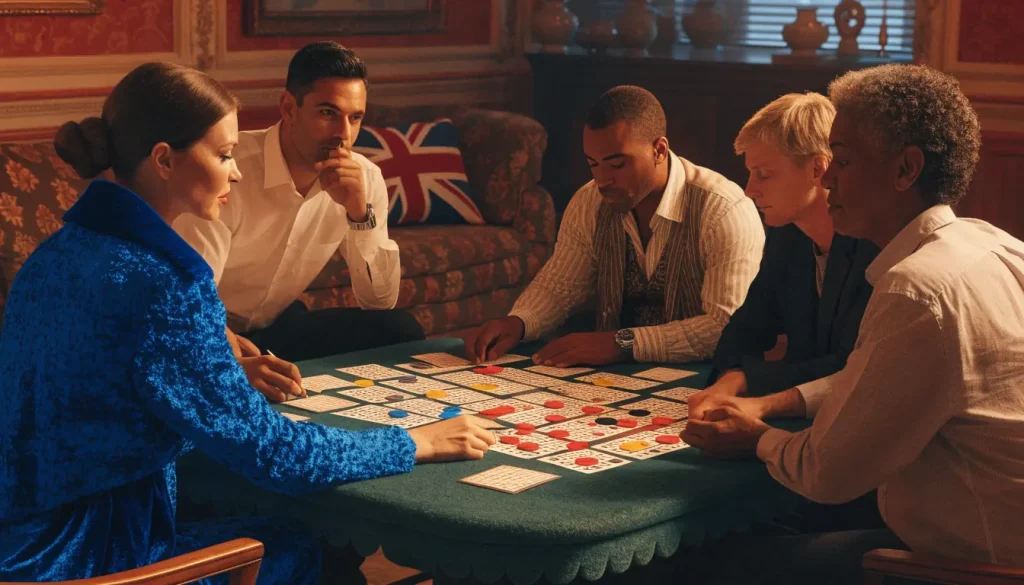
Bingo and slots are separate formats, even when a slot uses bingo imagery; a casino’s label alone does not confirm which games it offers.
How Online Bingo Slots Fit into a UK Casino
“Bingo slots” can sound like one product, but the wording can point to two different things. It may mean online bingo played for its own sake, or slot games that borrow bingo imagery and language. Those formats may appear together in conversation because both sit within the wider casino market, but they are not interchangeable. The label alone does not establish what a particular UK casino offers.
The distinction matters because the games work differently. Bingo centres on numbered cards and calls: players follow the numbers announced during a game, with the result depending on which numbers are drawn and how they match the cards. A slot is a separate game format, built around play on a machine-like screen. A title may use bingo references as its theme without becoming a bingo game. Familiar pictures do not define the rules.
That is the first useful distinction when considering online bingo and slots in the UK: one phrase may be describing a category of gambling, while another describes a theme within a different category. “Bingo” in a game’s title or artwork is not, by itself, proof that it offers bingo gameplay. Equally, a casino’s general focus or branding does not tell the whole story about the products available inside it.
Choosing a bingo casino involves more than finding games that appeal to you; payout timing is also worth checking. This list provides a quick reference to the payout-speed information available for each operator.
1. NightLuck
Payout speed: 1-3 business days
NightLuck lists a payout speed of 1–3 business days.
2. BeOnBet
Payout speed: 1-3 business days
BeOnBet lists a payout speed of 1–3 business days.
3. EvoSpin
Payout speed: 1-3 business days
EvoSpin lists a payout speed of 1–3 business days.
4. Zombillion
Payout speed: 1-3 business days
Zombillion lists a payout speed of 1–3 business days.
5. NightWin
Payout speed: 1-3 business days
NightWin lists a payout speed of 1–3 business days.
6. Jetsetspins
Payout speed: 1-3 business days
Jetsetspins lists a payout speed of 1–3 business days.
7. Revery Play
Payout speed: 1-3 business days
Revery Play lists a payout speed of 1–3 business days.
8. SpinFormula
Payout speed: 1-3 business days
SpinFormula lists a payout speed of 1–3 business days.
9. Britsino
Payout speed: 1-3 business days
Britsino lists a payout speed of 1–3 business days.
10. SlotoSport
Payout speed: 1-3 business days
SlotoSport lists a payout speed of 1–3 business days.
I have seen how a short label can do too much work in casino marketing. It groups products that feel related to a player, even when their mechanics and presentation differ. That can be convenient for navigation, but it can also blur the boundary between a bingo room and a slot lobby. The practical question is not what a phrase suggests; it is how the game is identified and described where it is offered.
A bingo-themed slot, if a casino lists one, should be understood as a slot with a particular presentation. A bingo game, if listed, belongs to the bingo format. The two descriptions answer different questions: what kind of game is it, and what does it look or sound like? Treating the theme as a game type can create the wrong expectation before play even begins.
This is also why “online bingo and slots” can be read as a request for a casino that covers both categories, rather than a request for one hybrid game. The wording does not settle that interpretation. It may refer to a site with separate bingo and slot areas, or to an interest in slot games carrying bingo-style themes. Those are different ways of organising a product range, not evidence that a specific operator carries either one.
A casino lobby is the place where that distinction becomes concrete. Its category labels, individual game pages and available titles show how the operator presents its products at that time. A broad marketing phrase is less precise: it can combine categories for convenience and may not describe a particular game’s mechanics. The listing matters more than the shorthand.
Amatic Slots at UK Casinos: Bonuses and Rules
This does not mean that every product label is misleading. It means the label has a limited job. “Bingo” may identify a format, a theme, or a broader area of interest, depending on the context. Slot imagery cannot establish that a game uses bingo rules, and a casino’s general description cannot establish which games are currently available. Clear product information is needed to tell one case from another.
The word “casino” can add another layer of ambiguity. In ordinary browsing, it may mean the overall service rather than a specific type of game. A person interested in bingo may be looking for a dedicated bingo experience; another may be looking for a casino that includes both bingo and slots; someone else may want slots with bingo-themed artwork. The same broad wording can cover all three intentions without identifying a particular product.
That is why descriptions should be read narrowly. A mention of bingo does not verify a bingo game, and a mention of slots does not establish that a slot is bingo-themed. Nor does the presence of one category imply the presence of the other. Product names and categories can help clarify the distinction, but the actual offering has to be established by the operator’s current information rather than inferred from a general phrase.
For a UK casino, the safest interpretation is therefore modest: bingo and slots are separate concepts, and a bingo reference in a slot’s theme does not merge them. A phrase joining the two may describe a player’s interests or a site’s intended range, but it is not a catalogue. Separate labels. Separate games.
Do
- Treat bingo and slots as separate product categories
- Verify specific game mechanics through the operator’s listing
- Read product descriptions narrowly
Don’t
- Assume a bingo-themed slot is a bingo game
- Infer product availability from general marketing phrases
- Treat a theme as a game type
Bingo Games and the Limits of the Available Information
“Bingo” can describe the subject of a casino page without telling much about the game behind the label. A title, category tile or promotional heading is not a rules explanation. In my experience, that distinction matters: presentation is designed to help people browse, while the game information is what establishes how a particular product works.
For bingo casino games in the UK, the useful unit of description is the individual game, not the broad category. Its rules should explain what counts as a result, how a round proceeds and how any prize is determined. Without those particulars, a category name cannot support claims about pace, features or the way a game compares with another. The label may be accurate as a broad classification, but it is not a substitute for the details.
That is why I avoid turning a general reference to bingo into a catalogue. A catalogue implies that named titles have been identified and that their availability has been checked. It also invites comparisons: one game is presented as faster, more feature-rich or more suitable than another. Those claims need a basis at title level. A broad heading alone cannot provide it.
The same caution applies to phrases such as “casino bingo games” and “bingo games at a casino”. They can describe a subject area, not a particular format. The wording does not establish whether a product is a traditional bingo game, a digital variation or a slot using bingo-inspired imagery. Those are different descriptions, and treating them as interchangeable can make a page sound more definite than the product information warrants.
Slingo Casinos in the UK: Rules and Checks
I have seen how category labels do their work. They help customers navigate a large lobby, and they can also help a site group products for editorial or promotional purposes. Neither use guarantees that every title in the group shares the same rules. A category is a filing system, not a promise about mechanics. Small distinction. Important one.
Game descriptions should therefore be read as product-specific statements. If a listing says that a game has a particular feature, the rules or information panel should explain that feature in context. If the description supplies only a name or a theme, it should not be stretched into a claim about how a round plays. The wording matters because readers may use it to decide whether a game is the kind of bingo experience they intended to find.
“Free bingo” needs the same precision. The word “free” can refer to access without a cash stake, but it does not, by itself, explain what is available, how access is provided or whether the experience matches a real-money product. A free-play label should not be treated as proof that a particular title is available or that its rules are identical across versions. Those details belong to the product description.
Searches that combine bingo and slot games can also blur the category boundary. A casino may use bingo language in a game title or visual theme without that making the product a bingo game. Conversely, a bingo category label does not establish that a product uses slot mechanics. The classification has to follow the rules of the named game, not an assumption drawn from its artwork or placement.
Attention: A category label is a filing system for navigation, not a guarantee that every title in that group shares the same rules or mechanics.
For a UK audience, the phrase “bingo casino games” is therefore best understood as a broad subject, not a reliable specification. A sound description names a game only when its identity is clear and explains mechanics only when the rules support them. Anything less risks turning a familiar label into an invented feature set.
That is not pedantry. It is the difference between describing a product and filling gaps with assumptions. A category can orient; the game’s own terms do the explaining.
Bingo and Slots: Two Products, Not One Offer
When “bingo” and “slots” appear together in a casino description, the wording can suggest that one venue carries both. It does not mean the products have merged into a single game, nor does the phrase by itself confirm that a particular casino offers either one. I treat the labels as separate claims: bingo describes one product category, while slots describes another. A combined headline is not an inventory.
That distinction matters because promotional copy often compresses several ideas into a short label. “Bingo and casino”, for instance, might be used to describe a bingo-branded venue with casino content, or simply to group two kinds of entertainment. The words alone do not establish what is available after account creation, whether both products are offered for real money, or whether the description refers to a current service. The wording is broad; the underlying offer may be narrower.
The same applies to references to bingo and slot games. A page can mention both categories without providing evidence that the operator actually supplies both. Nor does their appearance together prove that a single game combines bingo and slot features. That would be a separate product claim, and it needs a clear description rather than an inference drawn from a headline.
BGaming Online Casinos UK: What Can Be Verified
I have seen this distinction matter in editorial work: category labels are easy to group, but product availability is a separate matter. A casino may be discussed alongside bingo without being a bingo operator, and a bingo brand may be described as a casino without the description identifying which games are available. Neither wording should be treated as a catalogue. The distinction is plain.
A “best” label does not solve the problem. Ranking combined bingo-and-casino offers would require a defined set of operators and confirmation that each one provides both products. Without that foundation, a ranking would turn a search-friendly phrase into an unsupported recommendation. A confident list would look useful while leaving the central question unanswered: what exactly is being offered?
The practical way to read the wording is to separate three claims. First, is the business a casino, a bingo service, or both? Second, does it currently provide each named product to its customers? Third, is the wording describing two separate sections, or a particular combined game or promotion? Each claim needs its own evidence. One does not follow automatically from another.
This is not a technicality. A product label can shape expectations before a customer reaches the lobby. If the description promises bingo and slots, but only one category is visible, the gap is not repaired by the fact that both words appeared in an advert. Conversely, seeing a casino label does not tell anyone that bingo is included. Marketing shorthand is not a product specification.
For UK readers, “bingo and slots” is therefore best understood as a description of two categories that might be offered by the same business—not proof of a combined offer, a shared game, or a verified casino selection. The distinction keeps the language honest. A label is not a lobby.
A combined headline like "bingo and casino" is not an inventory; it may describe a branded venue or a group of entertainment types without confirming specific product availability.
Free Spins and the Terms Behind the Headline
“Free spins” describes a promotional mechanic, not the value or usability of a win. The headline may sound straightforward, but the offer’s terms determine which games qualify, how spins are credited and what happens to any winnings. That distinction matters when a promotion is described alongside bingo: wording that mentions bingo and slots does not, by itself, establish that free spins apply to bingo games.
I read the headline as the start of the offer, not its explanation. The next details to check are the eligible game, the period for using the spins, and whether a win is credited as withdrawable cash or as bonus funds subject to further conditions. Those are separate questions. A promotion can grant spins without making every resulting payout immediately available for withdrawal.
What the wagering cap covers
For bonus funds, the UK Gambling Commission’s wagering cap is 10×. It took effect on 19 December 2025. In practical terms, a licensed operator cannot set a wagering requirement above that ceiling for bonus funds. The cap is a limit on a particular condition; it is not a statement that every bonus has a wagering requirement, nor that all free-spin winnings are treated in the same way.
The distinction between a free spin and the resulting prize is easy to miss in promotional copy. The spin itself may be free, while the win is credited under a separate set of rules. Those rules may determine whether the prize is cash or bonus funds and whether any wagering condition applies. The 10× cap concerns wagering requirements on bonus funds; it does not turn every free-spin prize into cash or remove other stated conditions.
RTG Casinos UK: How Amatic Games Fit In
The terms also need to match the product named in the offer. A promotion mentioning slot spins is not automatically a bingo promotion, and a bingo welcome message is not proof that slot spins are included. I treat the game category as part of the condition, not decorative wording. If the offer does not identify the eligible games clearly, its headline cannot fill in that gap.
Reading a free-spin offer carefully
A useful comparison starts with the written conditions rather than the largest number of spins in the advert. Check the qualifying game, the expiry period, any deposit condition and how winnings are handled. Then separate the promotional value from the practical value: a win that remains bonus funds is not equivalent to one paid as cash.
The same care applies to phrases such as “free bingo slots”. They can blur two different things: free access to a slot game and a bonus promotion that happens to mention bingo. Neither phrase establishes that a particular casino offers free spins on bingo titles. Nor does a general free-spin promotion demonstrate that bingo products are eligible.
For bingo casino free spins in the UK, the important point is not to infer a product or condition from the wording alone. Bingo-specific spin eligibility and terms need to be stated by the operator; they cannot be assumed from a slots offer or from the general rules for bonus funds. Where the exact game and prize treatment are unclear, the headline has done its job as advertising, but not as a full account of the deal.
Small print matters.
UK Gambling Commission Wagering Cap
For bonus funds, the UKGC has set a wagering cap of 10×, effective from 19 December 2025. This is a limit on a particular condition and does not imply that every bonus is subject to wagering or that all free-spin winnings are treated as bonus funds.
No-Deposit Bingo and Slots: What the Evidence Can Confirm
“No deposit” is a promotional label, not proof that a particular bingo or slots offer exists. It suggests that a customer might be able to access some form of play without first paying money into an account. The label alone does not establish what is offered, who can claim it, or whether winnings can be withdrawn.
That distinction matters when bingo and slots appear together in the same headline. The wording could describe a promotion covering one product, both products, or neither in the way a reader expects. It does not confirm that a casino provides bingo games alongside slots, nor that either is available without a deposit. A phrase on a page is not an offer’s terms.
I have learned to treat the headline as the start of the check, not the result. The useful detail sits in the conditions: which game or product qualifies, what action is required to activate the offer, whether it is limited to particular accounts, and what applies to any resulting winnings. Without those details, “free” says little about the practical value of a promotion.
There is a difference between being able to try a game and being able to keep or withdraw a balance. An offer might impose restrictions on eligible games, a claim window, or withdrawal conditions; those are possibilities to establish from the published terms, not features that can be assumed for bingo or slots in general. If the terms are unavailable or do not clearly identify the product covered, the headline cannot fill the gap.
Live Casino UK: How Online Play Works
The same applies to a “free bonus”. The phrase does not tell whether the benefit is cash, game credit, access to a particular feature, or something else. Nor does it establish that the offer has no conditions simply because no payment is needed to claim it. “No deposit” describes one possible entry condition. It does not mean “no rules”.
For UK players, the broader regulatory distinction remains important: remote gambling offered to consumers in Great Britain requires the relevant UKGC licence. That requirement concerns the operator’s authority to offer gambling; it does not certify a particular promotion or confirm that bingo and slots are both included. A licensed operator’s status and a promotional claim answer different questions.
So a no-deposit bingo and slots offer should be treated as unconfirmed unless the operator’s own terms identify the offer, the eligible products and the conditions attached to it. A search result, banner or short description may leave those points unresolved. The wording can attract attention. The terms do the actual work.
Bingo Sites with Slots: Availability Needs Checking
A site described as a bingo casino may also have a slot catalogue, but the label alone does not establish what games it carries. “Bingo and slots” can describe two separate areas of a casino rather than one combined game or a single offer. In my experience, that distinction is easy to lose when promotional language compresses a whole site into a few words.
A reliable check starts with the operator’s own current games lobby. Categories and search tools can show whether bingo games and slots are both available, while the terms attached to an offer may clarify which products qualify. A general casino page, an old review or a banner using “bingo” is not enough to establish that the relevant games are currently offered to British customers. Availability can also depend on the operator’s arrangements with suppliers.
Verify Site Availability
- Check the operator’s current games lobby
- Confirm bingo and slots are both available
- Review terms to see which products qualify for bonuses
- Verify the current UKGC license status
That is why I would not treat “best bingo slot sites” as a ready-made category with a settled membership. Without checking the present catalogue, a list risks mixing operators that offer bingo, operators that offer slots, and operators that may offer both. A familiar brand or a casino-style layout proves none of those points. No shortcut. The product needs confirming at the operator.
The same caution applies to claims about bonuses at bingo sites with slots. A promotion may apply only to a particular game category, or may carry conditions that are not apparent from its headline. The presence of both products on a site does not mean a bonus covers both. Those are separate questions: what the operator offers, and what the promotion’s terms allow. A general bonus label cannot answer either one by itself.
There is also a separate regulatory question. Remote gambling offered to consumers in Great Britain must be provided under the relevant UKGC licence, regardless of where an operator’s key equipment is located. That requirement concerns the operator’s authority to serve the market; it does not certify that the operator has bingo, slots, or any particular combination of games in its lobby. A licence and a product listing do different jobs.
I keep those checks apart. A UKGC licence is a matter of regulatory status, while a current games catalogue is evidence of product availability. Neither should be used as a substitute for the other. For a new bingo and casino site, the same distinction matters: “new” is a description, not proof of its licence or its game range. Both details need to be established independently.
Online Casino Game Shows in the UK: What to Know
This approach avoids turning an attractive label into a promise. A site may use bingo language while offering a different mix of products, and a current catalogue may change after an older description was written. The useful question is not whether a site sounds like a bingo-and-slots destination, but whether its present terms and lobby support that description.
UK Bingo Casinos: What Licensing Does and Does Not Tell You
A UKGC licence is a regulatory status, not a product description. It tells me that a business has authorisation for the relevant gambling activity; it does not, by itself, establish that a particular casino offers bingo, slots, or both. That distinction matters when a page presents itself as a bingo casino: the label is not a substitute for checking what the operator is actually licensed to provide.
The Gambling Commission regulates gambling in the UK, including online casinos. In Great Britain, it is the sole regulator for commercial gambling. Its remit over remote gambling offered to people in Great Britain does not depend on where the operator’s key equipment is located. Moving servers or other infrastructure abroad does not, on its own, remove the requirement for a relevant UKGC licence when the business is serving that market.
That is the market-wide rule. It is not proof about an individual company. A general statement that a casino is “UK licensed” should be tied to the operating business and the activity in question, rather than inferred from a brand name, a game-provider logo, or a claim that a site is popular in Britain. The detail matters.
Licensing Requirement
Remote gambling offered to consumers in Great Britain requires a relevant UKGC licence, regardless of where the operator’s key equipment is located.
The Commission issues operating licences to businesses and personal licences to individuals who perform relevant roles in Great Britain. These are different permissions: the former concerns the business carrying on gambling activity; the latter concerns individuals working in specified positions. A personal licence is not a casino licence, and a software supplier’s authorisation is not the same thing as the operator’s permission to run a consumer-facing casino.
From inside the industry, I learned to treat licensing as a threshold check, not an endorsement. A licence identifies regulatory oversight and the category of activity authorised. It does not certify that every marketing description is precise, guarantee that a named bingo product is available, or amount to a ranking of operators. Those are separate questions.
Nor does a market-wide explanation establish the credentials of any particular bingo casino. That requires checking the relevant operating business and its current licence details, rather than relying on a banner or an affiliate description. A site can use familiar casino language while the underlying legal entity is less visible; the name on the promotional page may not be the name that holds the licence.
For British remote gambling, the governing principle is straightforward: businesses offering gambling to consumers in Great Britain need the appropriate UKGC authorisation, wherever their key equipment sits. The regulator’s role sets the framework. It does not turn a search label into evidence of a game, nor does it settle whether a particular site meets every expectation implied by “best”. Threshold, not verdict.
New-Site Bonuses and the No-Deposit Claim
“New” is a label, not evidence that a bingo site has launched or that it has a particular offer. A brand may be presented as fresh while its ownership, products or promotion still need checking. I separate those claims: the age of a name does not establish what games are available, and a bingo-and-slots bonus is not confirmed simply because the wording appears in an advert.
Amatic Slots at UK Online Casinos: Rules and Play
“No deposit” describes the headline promise that an offer can be claimed without making a deposit first. It does not, by itself, explain who qualifies, how the offer is activated, which games count or whether winnings can be withdrawn without meeting conditions. Those details belong to the promotion’s terms. Without the terms of a specific offer, the phrase cannot support a claim that a bonus is usable or worthwhile.
There is also a regulatory distinction. A business offering remote gambling to customers in Great Britain must hold the relevant UKGC licence, wherever the business or its equipment is based. A newly presented site name is not proof of that licence, just as a licence alone does not establish that the operator offers bingo, slots or a no-deposit promotion. Separate checks answer separate questions.
I would treat any advertised bonus as unconfirmed until the operator, the UKGC licence and the full offer conditions can be matched. If the promotion involves bonus funds, the UK Gambling Commission’s cap on wagering requirements is 10×; that rule does not verify that a particular bingo offer exists or remove other conditions. The wording still needs reading.
A code adds another layer, not certainty. It may be subject to eligibility rules or a stated claim process, so a code printed beside “free” is not proof that every account can redeem it. The operator’s own current terms are the relevant place to establish what the code does.
For searches about a new bingo casino with slots or a no-deposit bingo bonus, the responsible answer is narrow: no specific new site or associated offer can be endorsed here. Marketing language is easy to publish. Offer details are what make it real.
Main Conclusions
- A “no deposit” label does not mean “no rules” and requires verification of terms
- UKGC licenses are regulatory thresholds, not product endorsements
- Bonus codes are subject to eligibility and must be verified via operator terms
- Marketing labels for “new” sites do not prove license or game range
Bingo and Slot Sites: Avoiding Unsupported Comparisons
A “best” label only means something when the sites being compared are known to offer the products in question, and when the same criteria have been applied to each. I would not rank bingo and slot sites on a name, a promotional banner or an assumption that a casino lobby contains both. Those are not a comparison.
The first hurdle is product verification. A site may be described as a casino, a bingo destination or a slots venue, but those labels do not establish which games are available to customers in the UK. Nor does a general casino listing prove that bingo and slots are both offered there. Without confirmed examples of relevant operators and their bingo products, a list of the best bingo and slot sites in the UK would imply more than can be supported.
The same problem applies to new bingo casinos. “New” can describe a brand, a website or a promotion; it does not establish that the operator has a particular bingo catalogue or also supplies slots. I have seen comparisons become misleading when a broad category label is treated as proof of a specific product.
Betsoft Online Casinos UK: Slots and Paylines
A useful comparison would need consistent, current information for every site: what bingo and slot products it actually offers, how the catalogue is presented, and whether those details apply to UK customers. The criteria also need to match the purpose of the comparison. A site suited to someone seeking bingo first may not be the right choice for someone interested in slots. Combining both into one score can conceal that distinction.
That is why I cannot give a defensible ranking of bingo-and-slot sites from names or labels alone. It is not a verdict on any particular operator. It is a limit on what a comparison can honestly claim without product-level checks. No sound basis, no ranking.
For the same reason, “slot and bingo sites” is not a single verified category. It is a description that needs to be tested against each operator’s actual UK offering, rather than repeated as if every site in a general casino list provides both products. Until that distinction is established, a comparison would be guesswork dressed as guidance.
Amatic Slots at UK Online Casinos: Rules and Terms
Bingo Casino Apps and Mobile Access
A bingo casino app can mean two different things: a native app installed from an app store, or a mobile website opened in a browser. The distinction matters because the word “app” in a product description does not, by itself, establish that a downloadable application exists. It may simply refer to a service designed for a phone screen.
I have seen this distinction blur in casino marketing. A site may promote mobile access without saying whether the route is an app or a browser, and the two are not interchangeable for practical checks. An app listing should identify the publisher and the product; a browser service should be reachable through the operator’s own website. Neither label proves that bingo games are included.
For bingo casino apps in the UK, the relevant details are product-specific: whether bingo is available on mobile, how the games are accessed, and which account and payment functions work there. Those details cannot be inferred from the existence of a casino app, or from information about another game provider’s mobile titles. Different catalogue, different evidence.
Keno Online Casinos in the UK: Games, Odds and Checks
The same caution applies to bingo-themed slots. A slot that runs on a phone is not evidence of a bingo app, and a mobile casino interface does not establish that it contains bingo products. I would treat claims about a “best” bingo app as a comparison only when the named apps, their bingo availability and their current access routes can all be checked. Without that, the label is advertising shorthand.
The UK regulatory position still matters: remote gambling offered to Great Britain consumers requires the relevant UKGC licence, regardless of where the operator’s equipment is located. That licensing rule concerns the operator’s permission to provide remote gambling; it does not certify a particular app, its features or its bingo catalogue.
Mobile access is not proof of product access. Check the distinction.
Are Amatic games licensed and legal to play in the UK?
Yes. Amatic Industries holds a UK Gambling Software (Remote) licence, and its games are distributed to UK players through UKGC-licensed operators. The operator, rather than Amatic, handles deposits, payouts and customer support.
Do Amatic games work on mobile phones and tablets?
Yes. Amatic games generally run in a mobile browser as HTML5 games, without requiring a download.
What is the new UK slots stake limit, and how does it affect Amatic games?
The limit is £5 per game cycle for players aged 25 and over, and £2 for those aged 18 to 24. These limits apply to online slots, including Amatic games, at UK-licensed operators.