
Fruit Machine Slots UK: How Online Play Works
 Available in GB
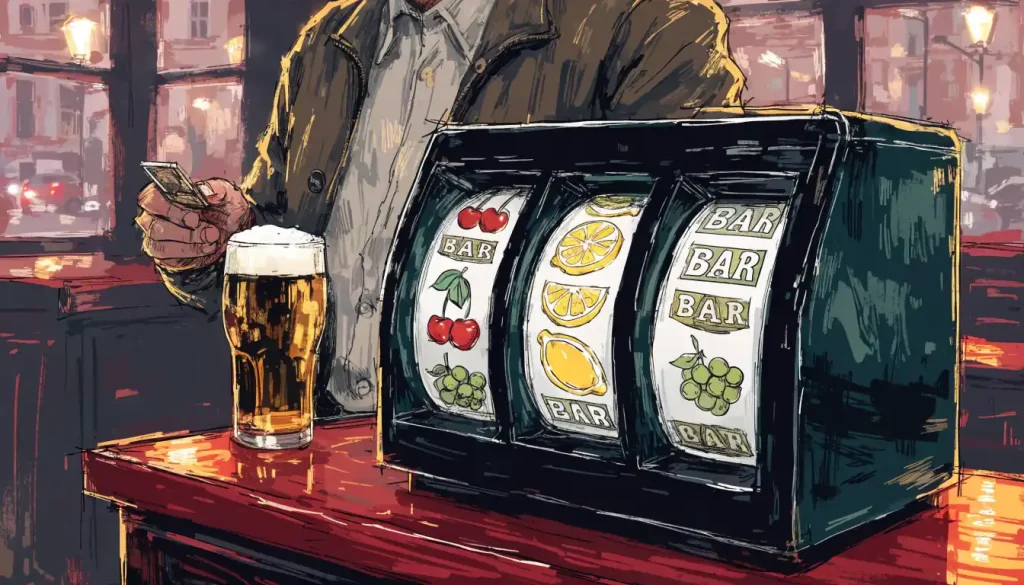
From three-reel classics to varied grids, the guide explains how outcomes are formed and what the familiar fruit-machine look does—and does not—mean.
How Online Fruit Slots Turn a Spin into an Outcome
The familiar fruit-machine look can make an online game feel like a direct copy of a physical cabinet. Underneath, the process is digital. Online fruit-machine-style slots grew out of physical fruit machines, but their reels, grids and ways of forming a win can be arranged in more varied ways. The important distinction is between what the screen shows and how the game determines the result.
An online spin is governed by a random number generator, or RNG. It produces outcomes independently: a previous result does not make a particular symbol more or less likely on the next spin. A run of near-misses, a gap since the last win or a sequence of matching symbols on screen does not change that underlying process. Each spin is its own event.
That can be easy to lose sight of when the reels animate, slow down and stop one at a time. The movement gives the result a visual sequence, but it should not be read as evidence that the game is adjusting towards a win while the reels turn. The animation presents the outcome; the RNG is what determines it. In my experience, that separation is the part of digital play that advertising tends to leave in the background. The display is theatre. The outcome is separate.
Reading the modern reel grid
Many modern fruit machines use a grid with five reels and three rows. That gives more symbol positions than the older, compact format associated with a traditional fruity, but the grid alone does not tell the whole story. A game also needs rules for deciding which combinations count as wins. Those rules are set out through its paylines or ways-to-win system.
A fixed-payline game has defined lines across the grid. A winning combination must follow one of the routes the game recognises. The lines may run horizontally or take other patterns across the reels, so symbols that look close together are not necessarily part of a winning line. The paytable and game information show which arrangements count. Watching the animation without understanding those routes can make a result look arbitrary; the rules provide the explanation.
Penny Slots in the UK: Spin Costs and Rules
Modern fruit machines can have between 10 and 50 fixed paylines. That range matters because a five-reel grid does not automatically mean that every possible route across it is active. The number of lines is part of the game’s structure, not a cosmetic detail. Two titles with similar fruit symbols and the same grid can still treat symbol arrangements differently.
Other games use 243 ways to win rather than a set of fixed lines. Here, qualifying symbols can form combinations across adjacent reels without having to land on a single marked line. The phrase describes a way of evaluating combinations, not 243 separate paylines. It changes how the visible grid is read: the question is whether the required symbols connect across the reels under that game’s rules, rather than whether they sit on one drawn path.
There is no single modern layout that defines every online fruit slot. A standard-looking grid may use lines; another game may count ways; a more dynamic format may alter the reel arrangement from spin to spin. The visual family resemblance can be strong while the underlying win logic differs. A familiar cherry or bell does not tell the whole story. The rules do.
When the reels change shape
Megaways takes the changing-grid idea further. Its reel system varies how many symbols appear on each reel for each spin, so the number of possible winning routes is not fixed in the same way as a conventional grid. The system can produce up to 117,649 ways to win. That figure describes the maximum number of ways the layout can create, not a promise that a spin will win or that every spin presents that maximum.
This is why a large number on a game screen needs context. A ways-to-win figure tells something about the combinations the system can recognise; it does not explain the chance of a particular result or predict what the next spin will do. The changing symbol count can make each screen look different, while the RNG still produces independent outcomes.
An online spin is governed by a random number generator (RNG). The animation presents the outcome, but the RNG is what determines it.
For anyone comparing online fruit slots in the UK, the useful starting point is therefore not simply whether a game looks like a pub machine. It is how its rules turn the grid into a result: fixed paylines, 243 ways to win, or a dynamic reel system such as Megaways. The theme may be old-fashioned. The mathematics and presentation are not necessarily so.
Classic Fruit Machines: Holds, Nudges and the Old Three-Reel Feel
The traditional fruit machine is defined as much by its restraint as by its symbols. Many classic fruit slots use three reels and a single payline, with few features around the spin. That compact layout keeps the action easy to read: the result is judged against one line rather than a grid of patterns.
The familiar controls are holds and nudges. A hold leaves a selected reel in place for the next spin while the other reels turn again. A nudge shifts a reel by one position after a spin, potentially bringing a different symbol onto the payline. Both features make the cabinet feel more interactive than a straightforward spin-and-stop game.
That sense of involvement needs a careful distinction. A hold changes which reels move on the next round; a nudge changes a reel’s position. Neither changes the random process behind the game’s outcomes. They create a choice or an extra decision point, not a way to control what the machine will produce.
The details are title-specific. Some games make these controls available only under stated conditions, and the number of holds or nudges can differ. The help screen is the practical place to confirm how a particular game handles them. Familiar controls do not imply identical rules.
I have seen these features described as a “skill” element. The word can overstate the case: the choice may shape the next action, but it does not turn a random result into a predictable one. That is the old three-reel appeal—simple presentation, with a little more to consider between spins. Not a steering wheel.
Fruit-Themed Slots Beyond the Classic Machine
Fruit imagery has travelled well beyond the familiar pub fruity. Online, it can sit alongside characters, storylines and bonus features, so a fruit theme does not necessarily mean a simple three-reel game. The visual reference may be familiar while the format is distinctly digital.
Video Slots in the UK: How Reels and Paylines Work
Rainbow Riches is a clear example of that transition. Barcrest first released it on physical cabinets in UK pubs, arcades and betting shops in 2006. The game moved online around 2009, carrying a recognisable name from the cabinet era into a different setting. That history matters: a branded online title can preserve the identity of a physical fruit machine without reproducing its exact play or configuration.
I have seen familiar names do a lot of work in a game’s presentation. They signal continuity, but they do not tell the whole story. Rainbow Riches online is associated with an RTP of 95%; physical machines are generally configured below that figure. The comparison is a reminder that the same brand can appear in different versions, with different settings. A title name alone is not a specification.
The broader range includes named variations such as Rainbow Riches Pick’n’Mix, Rainbow Riches Megaways and Rainbow Riches Freespins. Their shared branding places them within the same family, but it does not establish that they play alike. The format and details belong to each individual game.
Fixed Paylines
Defined lines across the grid where winning combinations must follow specific routes.
243 Ways to Win
Qualifying symbols form combinations across adjacent reels without needing to land on a single marked line.
Megaways
A dynamic system where the number of symbols on each reel varies, producing a changing number of winning routes.
That distinction is useful when browsing fruit-themed slot games in the UK: the fruit symbols may be the hook, while the actual experience depends on the title’s design. Familiar branding is not a promise of classic controls or identical returns. A name is only the start.
Fruit Slot Games: What the Paytable and RTP Actually Tell You
RTP, or return to player, is a theoretical percentage describing how much a game is designed to return across a very large volume of play. The typical range quoted for UK fruit-machine-style slots is 94% to 97%, although individual titles can sit outside it. That figure is not a forecast for a particular player, session or balance. A short run can end well above or below the published rate. It is a long-run calculation, not a promise.
The paytable is where the number becomes useful. It sets out the game’s winning combinations and their values, and may show the RTP or point to the game information screen where it is displayed. I treat that screen as part of the game, not as fine print to skip. A title’s artwork and name can stay the same while the version offered at a particular casino has a different published return.
A specialist review has noted that RTP can vary between versions of the same game. So a figure found in a general description elsewhere is not enough to identify the version currently available. The paytable at the specific casino is the relevant reference. Small detail. Material difference.
NetEnt Slots at UK Casinos: What Can Be Verified
RTP also does not say how often a game pays, how large a win will be, or when one might arrive. Those questions concern other aspects of the game and cannot be answered by the return percentage alone. Nor does a higher RTP turn a game into a reliable source of income; the figure describes a mathematical expectation over extensive play, not an individual outcome.
When comparing fruit machine slot games in the UK, I start with the displayed paytable rather than a headline figure copied from another listing. I check that the RTP belongs to the version actually being offered, then read the prize information alongside it. The percentage is a comparison point, not a verdict on whether a game will suit someone’s preferences or what the next spin will do.
That distinction matters in free play too: a displayed return explains the game’s stated mathematics, but it cannot make practice results representative of later play with money. A number can inform. It cannot predict.
Playing Fruit Slots for Real Money in Great Britain
Real-money play involves more than choosing a fruit-themed game and setting a stake. Registration, identity checks and age-based limits shape what can be played and how much can be staked on each spin. I have seen these controls treated as background paperwork; in practice, they determine whether an account can move from sign-up to play at all.
Registration and identity checks
Players must be at least 18 and have their identity verified to register for real-money fruit slots in the UK. The check is tied to the account, not to a particular game. A fruit slot does not create an exception to the age requirement, and a successful registration should not be confused with simply entering personal details into a form.
Do
- Verify your identity to access real-money play.
- Check the specific paytable for the version of the game offered.
Don’t
- Confuse a demo mode balance with withdrawable cash.
- Assume a brand name guarantees identical rules or returns.
That distinction matters because the account is the point at which the operator applies its checks and controls. If information needs confirming, access to real-money play may depend on completing the verification process. The game catalogue is secondary. No confirmed account, no real-money spins.
Stake caps depend on age
The regulatory position sets an online slot stake cap of £5 per spin for players aged 25 and over. For players aged 18 to 24, the cap is £2 per spin. These limits apply to online slots generally, including fruit-machine-style games; the theme or cabinet-style presentation does not alter the applicable cap.
The cap is not merely a suggested setting that can be raised through a preference menu. Regulatory guidance requires operators to enforce the per-spin limit at account level, so a player cannot exceed the relevant cap by changing games or placing a larger stake on another title. That is a practical difference between an account control and a voluntary limit: the operator must prevent the over-limit stake from being accepted.
The age bands can affect the available stake even when two players open the same game. The displayed game and its features may be identical, but the maximum permitted amount per spin is not. A smaller stake may still be selected; the cap defines the ceiling, not a required stake.
Treat the account as the control point
In my experience, the useful way to read these conditions is to separate game choice from account conditions. A title’s paytable explains its own rules; registration and stake controls govern whether, and at what stake, it can be played for money. Confusing the two can make a familiar pub fruity feel more straightforward than the account process actually is.
New Online Casinos in the UK: Understanding Amatic Slots
Real-money play also makes it easier to lose track of spending than a demonstration mode does, because each spin uses money from the account. A budget set before play gives that spending a boundary. Gambling is entertainment, not a way to make money; a win is not income, and a losing run is not a reason to raise the stake or chase a result. I would set a loss limit in advance and stop when it is reached. Plain discipline.
The age-based cap is a maximum, not a target. Choosing a lower stake does not change the account’s verification requirements, and a verified account does not remove the cap. Both controls apply independently: one establishes eligibility to play, the other restricts the amount that can be staked on a spin.
Fruit Slots at UK Casinos: Licensing Comes Before the Game
A fruit-themed lobby can make a casino look familiar: classic symbols, bright reels and titles associated with pub fruit machines. But the catalogue is not the first thing to assess. For online casino play in the UK, the operator’s regulatory status comes first. A recognisable game or polished website does not establish that the business is authorised to serve customers here.
The UK Gambling Commission requires online casino operators targeting UK players to hold a valid Commission licence. That requirement applies whether the operator is based in Britain or elsewhere. In practical terms, a casino’s location and branding do not replace the licence check. The relevant question is whether the operator itself holds the appropriate UK authorisation.
Licensing
Always check that an operator holds a valid UK Gambling Commission licence before playing. Unlicensed sites may withhold payouts or lack legal recourse.
That distinction matters because the operator, not the game’s theme, is responsible for providing the gambling service. A fruit slot may look identical across different websites, yet the protections around an account depend on the casino offering it. Licensing is the threshold condition; it is not a decorative badge to weigh against a larger game library or a more prominent promotion.
I have seen how the order of decisions can get reversed. A title catches the eye, a bonus headline sets the pace, and the operator’s status becomes an afterthought. That is a poor sequence. Advertising can describe a game or offer attractively, but it cannot establish that the casino is part of the UK-regulated market. Check the operator before considering what it has in its fruit-slot catalogue.
A UKGC licence also needs to be understood for what it is: a regulatory requirement, not a promise of a particular result from a game or a guarantee that every commercial decision will suit every player. It does, however, distinguish a casino operating within the UK regulatory system from one outside it. The distinction has consequences when something goes wrong.
Offshore casinos without a UKGC licence remain accessible to people in Britain, but they sit outside that system. A site may display fruit machine games and accept accounts without having the authorisation required to target the British market. That does not make it an equivalent alternative. Unlicensed sites may manipulate games or withhold payouts, and players may have no effective legal recourse. They also do not provide access to UKGC protections, GAMSTOP or IBAS dispute resolution.
This is why “best” is a weak starting point for choosing a fruit-slot casino. The word can refer to a large catalogue, a familiar brand or an attractive promotion; none answers whether the operator is licensed. An adjacent operator comparison can help organise choices, but a ranking should not displace the basic regulatory check. Licence first. Catalogue second.
GAMSTOP is relevant because its exclusion applies across every operator participating in the scheme, rather than only at the casino where an account was created. A specialist review describes the available exclusion periods as six months, one year or five years. For a person who has registered, the block is intended to prevent gambling with participating operators during the chosen period. It is not a feature to treat as a temporary account setting or a reason to try an unlicensed site instead.
The same principle applies to disputes. A UKGC-licensed operator is within the UK framework; an offshore casino is not. IBAS provides dispute resolution in the UK market, while an unlicensed operator does not sit within the same protections. That difference may be easy to overlook while browsing games, but it becomes central if a withdrawal or account issue arises.
A licence should also be checked at the operator level, not inferred from a game supplier’s name or a title appearing on the site. A supplier licence does not prove that every game build, return setting or title is available at every UK casino. The game’s own help screen is the place to confirm details for the version being offered. The operator’s authorisation and the game’s specific configuration are separate checks.
Regulatory Check
A legitimate UK fruit-slot casino begins with a valid Gambling Commission licence.
Fruit machine games can be a reason to browse a casino; they are not a reason to skip the operator check. In the UK, a legitimate fruit-slot casino begins with a valid Gambling Commission licence. Everything else—the familiar reels, the catalogue and the promotional wording—comes after that.
How to Compare Fruit Slots Without Chasing a “Best” Label
A “best” fruit slot sounds like a clear verdict, but the label hides the question that matters: best by what measure? A game can suit someone who wants a familiar pub-fruity feel and not someone looking for a more elaborate digital format. I compare the details that can be checked, rather than treating a single ranking as an answer for everyone.
RTP is one useful point of comparison, but it needs to be read in context. The typical range for UK fruit-machine-style slots is 94% to 97%, and some games sit outside it. That figure describes a theoretical return over extensive play, not what a particular session will produce. It cannot identify a guaranteed winner or predict the next spin.
There is another detail that can get lost in a headline figure: the same title may be offered in versions with different published RTPs. A specialist review may report a figure for one build, while the game available at a particular casino has another. I check the paytable or game information for the specific version in question. A number without that context is not a reliable comparison. Same title, different build.
Mechanics matter, too, but more features do not automatically make a game better. A straightforward layout may be the attraction for someone who wants an uncomplicated experience; another player may prefer a title with additional features. The useful comparison is whether those mechanics are appealing and understandable, not whether the feature list is longer. A feature name is marketing shorthand until the game rules explain what it actually does.
The named Rainbow Riches games show why titles should not be treated as interchangeable. Rainbow Riches, Rainbow Riches Pick’n’Mix, Rainbow Riches Megaways and Rainbow Riches Freespins are distinct games, not alternate labels for one identical experience. Their names alone do not establish which has the most suitable return or play style. The version’s displayed information and the rules inside the game provide the basis for comparing them.
I also separate game comparisons from casino comparisons. A fruit slot’s layout, paytable and version-specific RTP describe the game build; an operator’s licence, account conditions and available protections describe the site. A game provider’s name does not prove that every version or RTP is available at every operator. The game help screen is the practical check for what is actually loaded.
Bonuses make the word “best” even less useful when they are attached to a game recommendation. A promotion can have eligibility rules and wagering conditions, and not every game necessarily contributes in the same way. I treat the current terms as separate from the game’s own qualities. A bonus headline cannot improve a title’s mechanics or change its published RTP; it changes the conditions attached to promotional funds.
Before You Play
- Confirm the operator holds a valid UKGC licence.
- Check the specific RTP and paytable for the game version.
- Verify your account identity and age requirements.
- Set a budget or loss limit in advance.
A comparison can therefore be kept to a short set of questions: what version is available, what RTP does its paytable state, and what does the game’s feature set involve? That is more informative than a league table that puts unlike games in a single order. If the figures and mechanics are not shown clearly, the “best” label is doing the work the evidence should do.
The same method applies to pub-style fruit slots and newer fruit-themed games. Familiar symbols may make two titles look similar, but appearance alone does not settle their rules or return. I look at the actual game information, then decide whether its format suits the kind of play being considered. No universal winner.
Free Fruit Slots: Practice Play, Free Spins and the Real Distinction
“Free” can describe two different things on a fruit-slot page. One is a no-stakes practice mode; the other is a promotional offer attached to real-money play. They may look similar on screen, but they do not work the same way.
In practice play, the balance is not cash being risked on each spin. It gives a way to see the game’s layout and features without placing a real-money stake. Any balance shown within that mode is part of the game experience, not a withdrawable cash balance. A practice result also says nothing about what a later real-money spin will do.
Free spins are different. They are promotional turns in a real-money game, and their value depends on the offer’s conditions. A promotion may restrict which title can be played, set a time limit or require wagering before bonus-derived funds can be withdrawn. The word “free” describes the entry to those spins; it does not necessarily mean that any resulting funds are immediately available as cash.
Bonus-Buy Slots in the UK: Demo and Real Play
That distinction matters when an offer is presented beside a game. A title’s ordinary play mode and a promotion’s terms are separate things. The offer may apply only to selected games, and its rules determine how winnings are treated. I have seen the headline do the selling while the conditions do the accounting. Read the accounting.
A specialist review may describe a fruit machine game as having features such as free spins, pick-style mini-games, autoplay or quick spin, and some titles are designed for mobile play. Those are possible game features, not a standard package attached to every fruit slot. A free-spin feature built into a game is also not automatically the same as free spins granted by a casino promotion: one belongs to the title’s mechanics, the other to an offer’s terms.
For anyone comparing free fruit slots in the UK, the useful distinction is therefore between a no-stakes mode and promotional play. The first is for trying the game without risking money; the second is governed by conditions that can affect whether winnings become withdrawable. Neither label changes the game into a source of income.
Promotions can change, so an old banner or third-party description should not be taken as proof that an offer is still available. The operator’s live promotion terms are the relevant place to check eligibility, the games included and any wagering conditions before opting in. A large game library does not mean every title qualifies.
Different labels. Different terms.
Does a demo mode predict real-money results?
No. A demo shows the game’s layout and features, but outcomes are determined by an RNG and each spin is independent.
What is the difference between practice play and free spins?
Practice play uses a non-withdrawable balance to test mechanics, while free spins are promotional turns in a real-money game subject to wagering conditions.
Fruit Slot Demos: A Closer Look Before Real-Money Play
A fruit slot demo is useful for examining a game’s presentation before any stake is involved. I use that distinction carefully: a demo can show how the reels move, where information is displayed and how a feature is presented. It cannot show what a later real-money session will produce.
Online fruit-machine-style games descend from physical machines, but their digital outcomes are generated by random number generators. Each spin is independent. A run of losing spins in a demo does not make a win more likely next time, and a run of wins does not suggest that the same pattern will continue with money at stake. The demonstration is a way to inspect the title, not a rehearsal of future results.
That makes a fruit slots demo in the UK most useful for checking practical details. The game’s help or paytable screen can clarify what symbols mean and how its features are described. Watching a feature unfold may make its sequence easier to follow than reading a brief description. Still, seeing a feature in demo mode says nothing about when it will appear in another session.
The same limit applies to familiar controls such as holds or nudges where a game includes them. They can add choices or a sense of involvement, but they do not alter the random process behind outcomes. The interface may invite a decision; it does not turn that decision into control over the result.
I have found demos most informative when treated as a product inspection: does the layout make sense, are the rules easy to locate, and is the pace comfortable? Those are observations about the game’s design. They are not evidence of likely returns, a favourable streak or a future win. No prediction.
Fruit Machine Slots in the UK: What the Name Covers
Choosing a fruit machine slot site in the UK means considering practical details as well as the games themselves. This list highlights the payout information available for each operator.
1. NightLuck
Payout speed: 1-3 business days
NightLuck lists a payout speed of 1–3 business days, giving players a stated timeframe to consider.
2. BeOnBet
Payout speed: 1-3 business days
BeOnBet lists a payout speed of 1–3 business days, a useful practical detail when choosing where to play.
3. EvoSpin
Payout speed: 1-3 business days
EvoSpin lists a payout speed of 1–3 business days for player withdrawals.
4. Zombillion
Payout speed: 1-3 business days
Zombillion lists a payout speed of 1–3 business days, providing a clear detail about withdrawals.
5. NightWin
Payout speed: 1-3 business days
NightWin lists a payout speed of 1–3 business days, which is the available practical detail for this verdict.
6. Jetsetspins
Payout speed: 1-3 business days
Jetsetspins lists a payout speed of 1–3 business days for withdrawals.
7. Revery Play
Payout speed: 1-3 business days
Revery Play lists a payout speed of 1–3 business days, offering a stated timeframe for payouts.
8. SpinFormula
Payout speed: 1-3 business days
SpinFormula lists a payout speed of 1–3 business days.
9. Britsino
Payout speed: 1-3 business days
Britsino lists a payout speed of 1–3 business days, a concise point to keep in mind when assessing the operator.
10. SlotoSport
Payout speed: 1-3 business days
SlotoSport lists a payout speed of 1–3 business days for withdrawals.
“Fruit machine slots” can mean two related things, and the distinction matters when a game catalogue uses the label loosely. In its narrow sense, it means a digital version of the familiar classic fruit machine: simple reels, recognisable symbols and a restrained feature set. More broadly, it describes online slots that draw on the look or feel of fruit machines, even when their layouts and features have moved well beyond the traditional format.
The family began with physical fruit machines. Their digital descendants retain familiar visual cues, but they run on software rather than a mechanical cabinet. Each spin uses a random number generator, or RNG, to produce an independent outcome. The name signals a style or heritage; it does not mean that a game works like an old machine behind the scenes.
A classic fruit slot often has three reels and a single payline, with few added features. That compact format is what many people have in mind when they say “pub fruity”. Online catalogues, however, also use fruit-machine language for games with a different structure. A title can keep the bright symbols and familiar tone while introducing a more elaborate layout or extra features. The theme may be traditional; the format need not be.
That is where descriptions can blur. “Classic” is a useful label for the stripped-back three-reel format, not a guarantee that every game with fruit symbols belongs to it. Likewise, “fruit-themed” can describe a wider visual category rather than a close recreation of a physical cabinet. I have seen the same broad label cover games that feel quite different once opened. A name is a starting point, not a specification.
For anyone comparing fruit slots in the UK, the clearest distinction is between the narrow classic style and the wider online family. The former points to a familiar, minimal reel format. The latter includes digital games that borrow fruit-machine imagery while using their own designs. Neither label tells the whole story of a particular title.
So “fruit machine slots” is not one fixed game type. It can refer to a classic format, or to a broader group shaped by the same visual tradition. The useful question is what the game actually presents: its layout, features and rules, rather than the label on the catalogue tile. Familiar appearance. Different formats.