
Casinos and bank cheques in the UK: Boku explained
 Available in GB
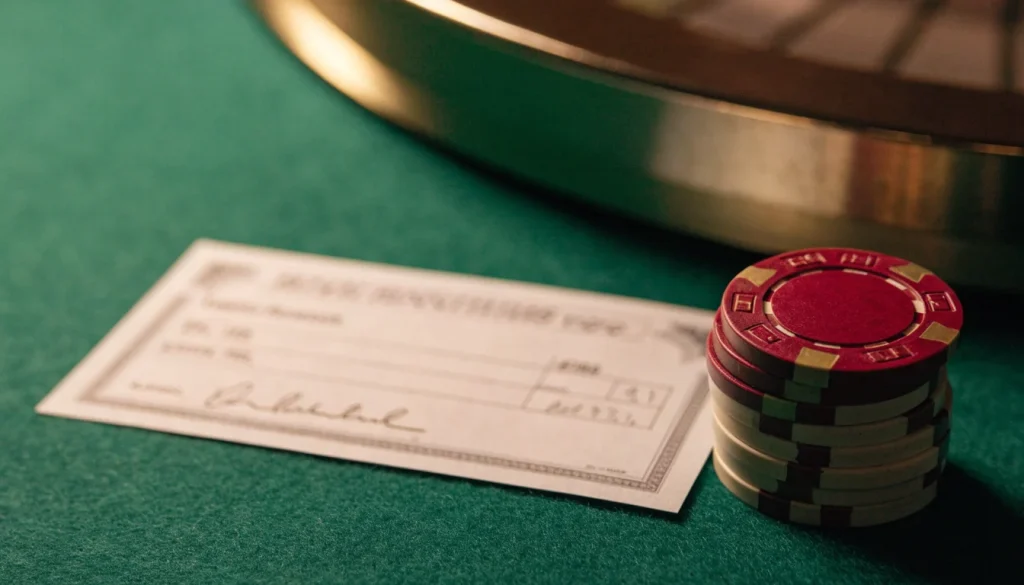
Bank cheques and Boku use different payment routes, and Boku deposits have limited amounts and no direct withdrawal route.
Bank cheques and Boku are different payment methods
A bank cheque and Boku are not two names for the same kind of casino payment. A cheque is a paper payment instrument drawn on a bank account; Boku is a Pay by Phone service. The distinction matters because a page discussing Boku does not establish that a casino accepts a bank cheque. Nor does a casino’s ability to accept one payment method imply that it accepts the other.
I have seen payment labels blur together in casino copy, especially when a page is built around a broad phrase such as “bank payment”. That wording can make an option sound more general than it is. A phone-based deposit is not a cheque deposit simply because both may ultimately relate to a customer’s finances. The route, provider and conditions are different.
For someone specifically looking to deposit by bank cheque, a Boku reference is not a match. The relevant question is whether the casino itself offers cheque deposits, not whether it lists a phone payment service. The reverse is also true: a casino that accepts cheques cannot be assumed to accept Boku. Payment methods need to be checked by their exact names in the casino’s cashier and terms, rather than inferred from a loose category or a headline.
If you are looking for a UK casino that accepts bank cheques, check directly whether cheque payments are supported before signing up. The entries below provide the available payout-speed information, but do not confirm bank-cheque acceptance.
1. NightLuck
Payout speed: 1-3 business days
NightLuck has a stated payout speed of 1–3 business days.
2. BeOnBet
Payout speed: 1-3 business days
BeOnBet has a stated payout speed of 1–3 business days.
3. EvoSpin
Payout speed: 1-3 business days
EvoSpin has a stated payout speed of 1–3 business days.
4. Zombillion
Payout speed: 1-3 business days
Zombillion has a stated payout speed of 1–3 business days.
5. NightWin
Payout speed: 1-3 business days
NightWin has a stated payout speed of 1–3 business days.
6. Jetsetspins
Payout speed: 1-3 business days
Jetsetspins has a stated payout speed of 1–3 business days.
7. Revery Play
Payout speed: 1-3 business days
Revery Play has a stated payout speed of 1–3 business days.
8. SpinFormula
Payout speed: 1-3 business days
SpinFormula has a stated payout speed of 1–3 business days.
9. Britsino
Payout speed: 1-3 business days
Britsino has a stated payout speed of 1–3 business days.
10. SlotoSport
Payout speed: 1-3 business days
SlotoSport has a stated payout speed of 1–3 business days.
There is a practical reason this distinction is easy to miss. Boku is a recognisable payment brand, while “bank cheque” can be used loosely in searches to mean several things: a cheque, a bank transfer, or simply a payment linked to a bank. Those are not interchangeable. A bank transfer moves funds electronically between accounts; a cheque is a separate instrument; Boku is a Pay by Phone option. The wording may sit close together on a web page, but the payment route does not become the same.
The position around Boku also needs to be described carefully. A limited group of casinos holding UK Gambling Commission licences continues to take Boku, but that group has contracted since 2023. That says something about the availability of Boku, not about cheque deposits. It would be a mistake to read a shrinking Boku list as evidence that casinos have stopped taking cheques, or as proof that cheque deposits are offered elsewhere. The two questions require separate confirmation.
There was no UK Gambling Commission rule specifically naming Boku and prohibiting it. The decisions to remove Boku were made by individual operators responding to compliance risk. From inside payment operations, that distinction is important: a payment method can disappear from a cashier because a business decides the risk or administration is no longer acceptable, without a regulator having issued a method-specific ban. “Banned” would suggest a blanket rule. That is not what happened here.
Casinos That Accept eCheque in the UK: Payment Checks
The same care applies to lists described as the best casino sites for bank-cheque deposits. A list of casinos that take Boku does not answer that question, even if its heading uses broad language about banking or deposits. A list may also become stale: Boku availability has been declining, so a historical mention is not confirmation that the method remains available at a particular operator. The operator’s own current cashier is the meaningful place to distinguish the options.
I would not treat a casino’s reference to “bank” as enough, either. A bank cheque is not an ordinary card payment or bank transfer. If the cashier names only a different payment method, that does not confirm cheque acceptance. Likewise, a general statement that deposits are supported says nothing about which instruments are accepted. Precise labels are more useful than broad claims.
For a search about online casino cheque deposits in the UK, the sensible conclusion is narrow: Boku information answers a question about Pay by Phone, not about bank cheques. The two may appear in the same discussion of casino payments, but one cannot stand in for the other. That is the distinction to keep in view when comparing payment options. No substitution.
Attention: A Boku reference does not establish that a casino accepts bank cheques, as they are entirely different payment methods.
How a Boku deposit is charged and confirmed
A Boku payment starts in the casino cashier, but the charge is routed through the mobile account rather than entered as a card payment. The player selects Boku, supplies the deposit amount and the mobile number, then confirms the transaction using a verification code sent by SMS. The phone number matters: it identifies the mobile account that will be billed or have its prepaid credit reduced.
The stages are straightforward, though they involve two services. The casino cashier collects the payment details and presents the confirmation step. Boku uses the mobile number and SMS code to verify the transaction. Once confirmed, the deposit is charged through the mobile network. This is the part that can be easy to miss when a cashier groups several payment choices together: choosing Boku does not mean the amount is taken from a bank account simply because the casino account itself holds money.
The SMS code is a confirmation step, not a separate deposit. Entering the amount and number begins the process; confirming the code authorises the phone-based payment. If the number is entered incorrectly, the code will not serve as confirmation for the intended mobile account. The practical check is to make sure the number entered in the cashier is the one linked to the phone being used before completing the SMS step. No card details are part of the stated Boku flow.
E-Check Casinos in the UK: How to Verify Access
What happens to the charge after confirmation depends on the type of mobile plan. For a contract customer, Boku deposits are added to the mobile phone bill. The casino deposit and the phone charge therefore appear through different services: the casino records funds in its account, while the mobile operator accounts for the payment on the bill. It is not a bank cheque clearing through the casino, nor is it a card transaction. The payment source is the mobile account.
For a pay-as-you-go customer, the amount is deducted from available PAYG credit instead of being added to a monthly bill. That distinction affects how the payment is funded, but not the basic cashier sequence: select Boku, enter the amount and number, and confirm by SMS. If the prepaid balance cannot cover the payment, the transaction may be declined. The available balance is the relevant pool of funds for that route.
This difference can matter when checking a phone statement or trying to understand why the casino balance and the mobile account do not look alike. The casino side shows the deposit made to the gambling account. The network side records the corresponding phone-billed charge or reduction in PAYG credit. A deposit can be completed in the cashier while its cost is accounted for through the mobile service. Two records, one payment route.
From an operational point of view, the SMS confirmation is the point at which a user actively approves the payment. It is not enough merely to select the method or type a phone number. The code step is part of the transaction flow, so a player who cannot receive or enter the verification message cannot complete the process as described. The cashier may show its own status, while the phone account reflects the charge according to the mobile plan.
Boku Deposit Process
Step 1: Selection
Choose Boku in the casino cashier, enter the deposit amount and your mobile number.
Step 2: Verification
Confirm the transaction using the verification code sent to your phone via SMS.
Step 3: Charging
The deposit is charged through the mobile network, either added to your monthly bill or deducted from your PAYG credit.
That separation also explains why the displayed deposit amount should be treated as a charge to the phone account, rather than as a request for the casino to collect money from a bank. The amount entered is the amount selected for the casino deposit; the route for paying it is Boku. For contract plans it is billed by the mobile operator, and for PAYG it is deducted from existing credit. The mobile account is the funding source.
I would read the cashier in sequence rather than assume that choosing a payment logo finishes the job: method, amount, number, SMS confirmation. Each step has a different role. The amount sets the intended deposit; the number points the transaction to a mobile account; and the code confirms it. After that, the charge follows the plan type. No card entry. No bank-account instruction.
Boku deposit limits are small and partly network-set
Boku limits are not a single figure that applies cleanly to every UK casino. Reports differ over the maximum for one deposit, and the daily ceiling is described separately from any casino-level transaction limit. That distinction matters: a cashier may display an amount the mobile network will not approve, while a network allowance does not establish what a particular casino will accept.
One specialist review gives £30 as the standard UK limit for a single Boku deposit, while reporting that some casinos or network operators may permit £40 or £50. Those higher figures are possibilities reported by that review, not a dependable allowance across the market. The cashier’s available options and the mobile operator’s rules can differ.
Casinos That Accept Neosurf in the UK: Payment Guide
Other reporting describes a much smaller per-transaction amount: about £10, alongside a £30 daily limit applied at network level. A further account gives the same £30 daily figure but specifies no per-transaction cap. These accounts do not agree on whether there is a standard transaction ceiling, or what that ceiling might be. It would be misleading to combine them into one definitive limit.
The daily cap is also not necessarily set by the casino. A specialist review attributes Boku’s daily deposit limit to the mobile operator. In practice, that means casino acceptance and payment approval are separate checks: the casino can make Boku available in its cashier, but the network may still enforce its own daily allowance. A deposit can therefore be constrained by the service handling the phone payment, not just by the gambling account.
That is the part often hidden by a simple “limit” label. It may refer to the amount allowed in one casino transaction, the total accepted by the network over a day, or a rule specific to an operator. Those are not interchangeable. The figures above should be treated as reported limits, not a promise that any particular account can deposit those amounts.
The difference is useful when a payment fails. A casino’s displayed maximum does not prove that a network will authorise the full amount, and a network-level daily ceiling does not tell the player what each casino’s cashier permits. The actual terms may vary between operators and networks. No universal figure.
Single Deposit Limit
Reported as £30, though some sources suggest £40 or £50 may be permitted by certain operators.
Daily Network Limit
Reported as £30, enforced by the mobile operator regardless of the casino’s own limits.
Alternative Reporting
Some accounts describe a per-transaction limit of approximately £10.
For anyone comparing UK casinos that accept cheques, these Boku figures do not establish that a casino accepts a bank cheque: they describe a phone-payment method. A bank cheque and Boku are different ways of moving money, and limits attached to Boku cannot be used to infer cheque acceptance. The relevant Boku question is narrower: what does the cashier allow, and what limit does the mobile operator apply?
In short, the available reporting points to small deposits and a daily network cap, but disagrees on the per-transaction ceiling. The £30, £40 and £50 transaction figures come from a specialist review, while other accounts describe about £10 per transaction or give no transaction cap. The network-level daily figure is reported as £30. Treat each as a reported condition rather than a market-wide rule.
A Boku deposit does not provide a withdrawal route
Boku can put money into a casino account, but it cannot carry winnings back out. That distinction is easy to miss when a cashier presents several options under one broad “payments” heading. In practice, a deposit method and a withdrawal method are separate functions. A payment option appearing beside the deposit field does not mean it can also receive a payout.
I treat Boku as a one-way funding route. Once casino funds need to be withdrawn, another method has to be available and registered on the account. UK players using Boku must have an alternative withdrawal method, such as a debit card, e-wallet or bank transfer. The casino’s cashier and account rules determine which options are available for that account; Boku itself does not become a cashout destination.
Casinos That Accept MuchBetter in the UK
That matters when comparing online casino payment choices. A bank cheque, where an operator offers cheque payments, is not another name for Boku, and neither should be assumed to handle both sides of an account’s payment activity. A UK casino deposit by cheque and a Boku deposit are distinct arrangements. The useful question is not just how funds enter, but which approved route the operator provides for funds leaving.
The mismatch can become apparent only when a withdrawal is requested. Boku may have been accepted for the original deposit, yet it cannot receive the casino’s payment. The account then needs a separate eligible route. That is not a failed Boku transaction; it is a limit of what the service does.
From the operator’s side, payment methods are configured for particular functions. A cashier can offer a deposit method without supporting it for withdrawals, and the customer-facing list may not make that distinction obvious at first glance. “Simple payments” is the sales language. The operational detail is that each route has a defined purpose.
Before depositing, the withdrawal option should therefore be checked as well as the deposit option. It is especially important not to assume that a casino that accepts cheque payments will use cheques for payouts, or that a method accepted for deposits can be used in reverse. The operator’s terms and cashier should identify the available withdrawal routes.
This is also why Boku should not be treated as a substitute for a bank account or a complete account-payment arrangement. It can fund play, but it cannot settle a withdrawal. If no suitable alternative method is registered, the deposit choice has not solved the whole payment question.
Boku is a one-way funding route; it can be used to deposit funds into a casino account, but it cannot be used to withdraw winnings.
The distinction is plain, but easily overlooked: Boku pays in only. A separate route is required for withdrawals.
Why pay-by-mobile options have become less common
The decline of Boku does not mean that Pay by Phone has disappeared from UK casino cashiers. It means the payment choice is less consistent: an operator may replace Boku with another service, or remove phone payments altogether. The mobile network can support a service while a particular casino chooses not to offer it.
A specialist review describes operators moving away from Boku since 2023, with Fonix and Siru Mobile among the replacements. Some operators have removed Pay by Phone rather than switching provider. That distinction matters. A new name in the cashier is not evidence that Boku is still available, and the presence of a mobile payment service elsewhere does not establish that every casino accepts it.
There was no UK Gambling Commission rule naming Boku as a banned method. Individual operators dropped it because they viewed it as a compliance risk. From the operator’s side of the counter, removing a payment route is a business decision: the cashier reflects the methods the company is willing to support, not every method that a network could technically process.
The network picture is broader than the casino picture. EE, O2, Vodafone and Three support Pay by Phone and Fonix. That tells us those networks support the services; it does not guarantee that a casino offers either one, or that a particular account will see the option. The operator’s cashier remains the practical test.
Ukash Casinos in the UK: What Payment Options Remain
This is why older lists of casinos accepting Boku can mislead. A list may record a past cashier setup, while the operator has since changed provider or withdrawn phone deposits. Names attached to a payment method should be treated as time-sensitive, not as a standing promise of availability. A casino that once accepted Boku may now offer Fonix, Siru Mobile, or no Pay by Phone option at all.
For someone comparing payment methods, the useful distinction is between network support and casino acceptance. The first is a technical condition; the second is an operator decision. Neither establishes that a casino accepts bank cheques, and a phone-payment change should not be read as evidence about cheque deposits. Different rails, different decisions.
Bonus terms can treat phone payments differently
A deposit method and a promotion are separate decisions in a casino cashier. A payment option can be available without qualifying for a welcome offer, and the reverse can also be true: an operator may count a Pay by Phone deposit towards a promotion while placing conditions on how the bonus can be used. I have seen players treat the payment button as confirmation that the offer applies. It is not.
The operator’s bonus terms decide eligibility. They may exclude phone payments altogether, restrict particular promotions, or set conditions that apply only to bonus funds. Pay-by-phone deposits are commonly excluded from welcome offers, so the method should be checked against the terms for the specific promotion before a deposit is made. The wording matters: a general statement that a casino accepts deposits does not settle whether those deposits count for a bonus.
Do
- Check the specific promotion terms for payment exclusions
- Confirm bonus eligibility with the operator if language is unclear
Don’t
- Assume a payment button confirms bonus eligibility
- Treat a general statement about deposits as a guarantee for bonus qualification
A specialist review reported that MrQ, Duelz, Mr Vegas and Videoslots accepted Pay by Phone deposits for bonus eligibility. That is a reported snapshot, not a standing promise about every offer at those brands. Promotions and payment arrangements can change, and one operator’s treatment of a phone deposit does not establish the policy at another casino. The offer’s own terms remain the controlling detail.
Boku itself does not appear to bring a dedicated bonus with it. In a specialist review of Boku casinos, the assessed platforms were reported to have no restrictions specifically attached to Boku deposits. That is narrower than saying every Boku payment qualifies for every promotion. A general exclusion for phone payments can still matter, and an offer may have conditions unrelated to the deposit method.
The practical distinction is between a Boku-specific restriction and a promotion’s broader rules. If the terms exclude Pay by Phone, the deposit may not qualify even where the cashier accepts it. If they do not name Boku, the wording still needs to be read in context rather than treated as automatic approval. Marketing copy tends to foreground the offer; the eligibility clause is where the operator defines its boundary.
I treat bonus eligibility as something to establish before depositing, not something to resolve after a payment has gone through. The relevant terms should identify whether phone deposits count, which offer is involved, and what conditions attach to bonus funds. If the language is unclear, confirmation from the operator is more useful than assuming the payment method and promotion are compatible.
Casinos That Accept Ethereum in the UK: How to Check
No automatic match.
Using Boku indirectly through an e-wallet
A specialist review describes a workaround for casino accounts where Boku is not available as a direct deposit option: fund a Neteller wallet with Boku, then use Neteller to deposit at a casino that accepts it. That is a two-step payment path, not a bank cheque facility and not proof that the casino accepts Boku itself.
The distinction matters in a cashier. A casino lists the methods it accepts for deposits; if Neteller appears, that does not mean the operator also takes Boku. Boku would be used at the wallet stage, while Neteller would be selected in the casino cashier. Each business sets its own accepted methods, so the route depends on Boku being usable to add funds to Neteller and on the casino allowing Neteller deposits.
I treat this as a specific option to verify, rather than a general feature of e-wallets. The described route does not establish that every Neteller account can be funded this way, or that every casino accepting Neteller will accept a deposit funded indirectly through Boku. Payment availability can differ between the wallet and the casino, and the cashier is where the casino’s current options are shown.
Indirect Boku Deposit Route
It is possible to fund a Neteller wallet using Boku and then use that Neteller wallet to deposit at a casino. This requires both Boku to be usable for Neteller funding and the casino to accept Neteller deposits.
There is also a practical difference between a cheque and this arrangement. A bank cheque is a banking instrument; the route above uses a phone-payment service to add value to an e-wallet, followed by an e-wallet payment to a gambling account. Similar search wording does not make the methods interchangeable. A casino that accepts Neteller is not, on that basis alone, a casino that accepts cheques.
From the operator’s side, the wallet is the payment method visible at the casino cashier. The earlier Boku step belongs to the wallet relationship, not to the casino’s own list of deposit options. That separation is easy to miss when a payment guide describes the whole chain under a single label. The label can make an indirect route sound like direct casino acceptance.
So the route can be relevant where Neteller is accepted and Boku can be used to fund it, but it should not be read as a promise of availability across accounts or operators. It is an indirect route, with two separate acceptance checks. Not cheque acceptance.
PAYG balance and eligible deposit amounts
A Boku deposit from a pay-as-you-go phone is constrained by the credit already on that account. A specialist review describes the transaction as limited to the remaining PAYG balance: if the requested amount is greater than the available credit, the payment may be declined. That makes the phone account a practical ceiling, separate from any amount offered in the casino cashier.
Casinos That Accept WebMoney in the UK: What’s Verified
This detail matters because the casino screen can make a payment option look more flexible than it is. The deposit amount is selected in the cashier, but the charge is settled through the mobile account. On PAYG, there is no monthly bill to absorb a shortfall. The available balance has to cover the chosen amount. A low balance can therefore prevent a deposit even when Boku appears as an available option.
A specialist review also reports that Boku deposits must be in amounts divisible by ten, with £10, £20 and £30 given as examples. On that description, an amount such as £15 would not fit the stated denomination rule. This is a reported Boku condition, not a general rule for casino deposits or for other payment methods.
The two constraints work together. First, the requested amount has to match an eligible Boku denomination; then the PAYG balance has to be sufficient to cover it. Having enough credit does not make an ineligible amount acceptable, and choosing an eligible amount does not help if the balance is too low. That is the distinction often lost when payment pages describe a deposit method in a single line.
These details are specific to Boku and should not be read as evidence that a casino accepts bank-cheque deposits. A cheque is not the same payment route as a charge against a phone balance. Where the aim is to fund an account without using a bank card, Boku may be presented as a phone-payment option, but the cashier’s available methods and the operator’s current terms still determine whether it can be used.
PAYG Restrictions
Deposits from pay-as-you-go accounts are limited by the available credit balance and may require amounts to be in denominations divisible by ten (e.g., £10, £20, £30).
I have seen payment descriptions blur the difference between the casino’s chosen deposit menu and the rules applied by the payment route itself. The former shows what the operator offers; the latter can still restrict which amounts go through. With PAYG, the remaining credit is part of that calculation. With Boku, the reported denomination condition is another. Neither changes how bank cheques work.
The stated Boku monthly cap needs context
A reported Boku limit is sometimes presented as a package of three figures: a €10 minimum deposit, a €30 maximum deposit and a €240 monthly cap. Those amounts describe Boku, not bank-cheque deposits. A cheque is a different payment method, so these figures cannot be used to infer what a casino will accept by cheque or how it will process one.
There is also a material disagreement in the published Boku limits. One specialist casino review gives the euro-denominated minimum, maximum and monthly cap. Other UK-focused reporting instead describes a £30 standard transaction limit, with some operators said to allow £40 or £50. These are not interchangeable descriptions: the currencies differ, and one account includes a monthly ceiling while the other focuses on a single transaction. Treating them as one settled UK-wide rule would conceal the conflict.
That distinction matters in practice. A monthly cap and a per-deposit limit answer different questions. A customer could encounter both a maximum for an individual payment and a separate restriction on total use over a period; one figure does not establish the other. Nor does a reported Boku limit establish a bank-cheque limit. Payment rules belong to the method and the operator’s cashier, not to a broad label such as “casino deposit”.
I have seen numbers travel from a payment-method review into general casino copy after their context has been stripped away. The result sounds precise, but precision without scope is misleading. Here, the € figures should be read as a reported Boku-specific set, while the sterling figures represent a conflicting account of UK Boku transaction limits. Neither should be recast as a universal term for every casino or payment route.
Casinos That Accept Diners Club in the UK
For anyone comparing payment options, the useful point is not to convert one set of figures into the other. It is to identify which method the stated limit belongs to and whether the casino’s own cashier presents that method and its terms. A Boku monthly cap says nothing about the availability or limits of bank cheques. Separate method. Separate terms.
Check the casino’s UKGC status before depositing
A payment option listed in a cashier does not, by itself, show that an online casino is authorised to serve customers in Great Britain. That applies to bank cheque payments as much as to any other method. I treat the operator’s regulatory status as a separate check: the UK Gambling Commission regulates commercial gambling in Great Britain, including remote gambling offered to people there, even when the equipment running the service is located elsewhere.
The Commission is the sole regulator for commercial gambling in Great Britain. It grants operating licences to businesses and personal licences to individuals working in relevant roles. Those are different permissions, so a business’s licence is the key starting point when checking the casino itself.
Klarna at UK Casinos: Check Deposit Eligibility
Before depositing, find the operator’s name and licence details and compare them with the UK Gambling Commission’s public register. The name should identify the business behind the casino, not merely a brand or payment provider. If the register does not confirm a current operating licence for the relevant business, the presence of a bank cheque option is not a substitute for that authorisation.
This check establishes who regulates the operator; it does not confirm which payment methods the casino currently accepts. Cashier options can change, so payment availability and licensing need to be verified separately. From inside the industry, that distinction matters: payment labels describe how funds may be handled, while the licence identifies the business permitted to offer remote gambling in Great Britain.
A cheque is not a licence.
What are the deposit limits at pay-by-mobile casinos?
Boku is typically limited to about £10 per transaction and £30 per day at network level, although some casinos or operators may allow up to £40 or £50 per transaction. Your mobile operator sets the daily limit, and PAYG deposits are also capped by your remaining phone credit.
What is the standard Boku deposit limit in the UK?
The standard maximum is £30 per transaction, though some casinos and mobile operators may allow up to £40 or £50. Network-level limits are typically about £10 per transaction and £30 per day.
What is the best alternative to Boku for casino deposits?
Fonix and Siru Mobile are alternatives used by some casinos; availability depends on the operator. MrQ and Duelz accept Fonix, while Mr Vegas and Videoslots accept Siru Mobile.
Why might a Boku deposit be declined?
A deposit may fail if your PAYG balance is too low, you have reached your mobile operator’s daily limit, or the amount is not divisible by ten. Boku deposits are available in amounts such as £10, £20 or £30.
Can a casino deny issuing a promotion if I deposit with Boku?
Yes, bonus eligibility varies by operator. MrQ, Duelz, Mr Vegas and Videoslots are confirmed to accept pay-by-phone deposits for bonus eligibility.
How can I be sure Boku is available where I live?
Check whether Boku appears in the casino’s cashier and whether your mobile network supports pay-by-phone payments. Pay by mobile and Fonix are supported by EE, O2, Vodafone and Three.
How does Boku work?
Choose Boku in the casino cashier, enter the deposit amount and your mobile number, then confirm with the SMS verification code. The payment is charged to your phone bill or deducted from your PAYG credit; Boku can fund deposits but cannot be used to withdraw winnings.
Deposit Limits & Banking: Great Slots Casino Payments 2026
Created by the "" editorial team.